BBR Home > By Use > Best Astronomy Binoculars
Buyers Guide to the
Skip the blurb, show me the best astronomical binoculars >>
 Astronomical Binoculars
Anyone with an interest in Astronomy should own a good pair of binoculars. Even avid amateurs with a houseful of telescopes will have at least one pair of binoculars at the ready.
It was during my training into becoming a field guide (safari guide) that I learnt in any detail some of the southern hemisphere's star constellations, it was also the first time that I had ever really looked at the stars through binoculars. Even though I was only using my compact Steiner 10.5x28 Wildlife Pro's which are far more suited to looking at wildlife than the stars, I was amazed at just how many more stars you can see through binoculars than you can with the naked eye, so much so that it became difficult to pick out the constellations because of all the "new" stars that I could now see.
If your main interest in astronomy is exploring the fine details on planets or showing structure in distant galaxies, you will probably also eventually want to get a telescope as binoculars just don't have enough magnification. However, binoculars have their advantages over telescopes for astronomy and a wide field of view is one of them. If are new to astronomy or if you thrive on large open star clusters and big, extended nebulae, binoculars can actually work better for you than a telescope. It is often said that binoculars are the best "first telescopes" you can buy and even an experienced astronomer usually keeps one with them at all times.
Whilst both telescopes and astro binoculars are designed to give you a better view of the heavens at night, they both have their unique advantages and disadvantages and thus the best option will vary depending on your requirements at that moment. It is because of this, most people that a very interested in astronomy and practice it a lot, will posses at least one telescope AND a pair of bins.
Advantages of an Astro Binocular
In general astronomical binoculars should not really be thought of as a substitute for a telescope, rather you should think of them as something to be used along with your scope, especially when you want to get a wider field of view and see more of the sky at once. But to give you an idea of what kind of things you can see, the observations below were made whilst using the great value Celestron SkyMaster 25x70 Binoculars on a night with an almost full moon and a fair amount of light pollution:
Moon
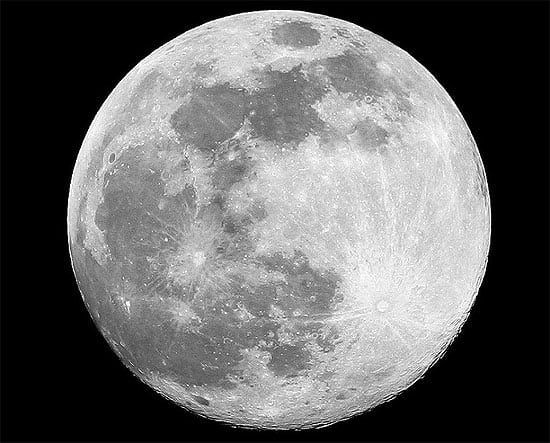
You get some fantastic, clear and crisp views when looking at the moon, especially if it is large and full, it almost completely filled up my field of view and whilst a tripod was not necessary, it really helps keep the image steady and gives your arms a rest during longer periods.
Planets
Looking at smaller deep-sky objects, like planets, stars and clusters a tripod is pretty much essential to keep the view steady enough.
As expected, Mars is easily observable as a small red ball, but you can't really make out any other features than that, but am told that in better conditions you may be able to make out the basins from the red areas.
Jupiter is also observable as are it's moons which is great, but once again observing any features on the plant was not possible, but once again I think in better conditions you will be able to see the Great Red Spot on the planet.
Seeing the iconic rings around Saturn is a great feeling, but it is difficult to see where the rings separate from the planet.
DSO's
For me the the Orion Nebula appeared as a very faint grey blotch, but once again think it may be possible to see more on a better night.
What pair of binoculars that you should get, will depend on how specialised and exactly what you want to use them for: The best binoculars for someone who wants to observe the stars with, but also then to use during the day, will be different to those that want to only use the binoculars for star gazing and don't have to worry about carrying them about.
Below I will go over what features you need to look out for depending on your specific needs and in this way, I hope it makes it easier for you to find the best astronomy binoculars for you:
MagnificationTip: The first number on the name of a set of binoculars is it's magnification. e.g.: Celestron 25x100 Astronomy Binoculars have a magnification of 25x |
The ideal magnification on a set of binoculars to be used for astronomy will differ depending on the way you intend to use it:
Hand held binoculars for astronomy and other general use
Hand holding a binocular is an enjoyable and less expensive way to enjoy astronomy, many "normal" sized binoculars are cheaper than the larger "giant" ones and there are no accessories to buy and there is no set up time.
Also remember that mounting a binocular on a tripod and looking through them is not that practical for viewing positions at or close to being directly above you.
They also have the added bonus in that they are far more versatile and you can use them for many other applications. If you plan to use this method, you should keep magnification below 12x in order to maintain steadiness. A good pair of binoculars with a magnification of 7x to 12x and a large objective lens will show you planets in our solar system, hundreds of star clusters, nebulae and even some galaxies.
Large binoculars to be used on a tripod
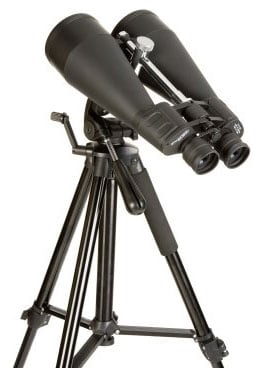
Putting a binocular on a tripod or mount pushes the binocular into the telescope realm as far as operation goes, but it is the only way to handle magnifications over 15-20x effectively. A dedicated and specifically designed astronomy binocular with magnifications of 15x to 30x will show more detail and resolve more stars, though it still won't turn your binocular into a telescope. Still, there is nothing like the view in a 25x100mm binocular to take your breath away on a dark, clear night.
Objective LensTip: The second number on the name of a set of binoculars is it's objective lens size measured in millimeters. e.g.: Celestron 25x100 Binoculars have objective lenses that measure 100mm in diameter. |
This is the size of the large lens at the end of your binoculars, it is indicated in the name of the binoculars and is measured in millimeters. so for example the Celestron 15x70 Astronomy Binoculars have an objective lens diameter of 70mm.
The larger the objective lens, the more light your binoculars can potentially let in. This is very important for low light conditions as the increase in light will not only make for a brighter image but you will get more detail and thus be able to make out fainter stars etc.
Obviously the larger the lenses, the larger the binoculars, so again the size of your objective lenses are important depending on what you wish to use your binoculars for. Hand held binoculars have to be light enough to hold up to the sky, whilst binoculars mounted on a tripod can get very large.
Hand Held Astronomy Binoculars
If you are going to use your binoculars for astronomy and don't want the hassle of using a tripod, 7x50 binoculars are a classic size. In recent years the giant binoculars have captured the headlines, but these are still unbeatable for viewing really extended open clusters and nebulae and as far as astronomy binoculars go, nothing is easier to use than a 7x50.
However sometimes you may want to sacrifice a little of the field of view and get deeper into space for a little more detail with a 10x50 binocular which is also very popular.
Most people are still just able to hand hold a 10x50 and keep the image steady enough for a good view and this setup still provides you with a nice balance a the amount of detail and penetration, the cost and a fairly wide field of view of about 6.5° or more.
A 10x50 still has a reasonably large exit pupil of 5mm (see below for more details) which should still provide you with a bright enough image for use in most situations. Also see my article on the Best 10x50 Binoculars for Astronomy.
Giant Binoculars
Binoculars with objectives of 60mm or more are considered to be giant binoculars and often go by the names of Observation binoculars or more often Telescope binoculars in the US.
Whilst it is possible to hand hold a 10x70 or even an 11x80 for short periods of time (by grasping them around the barrels near the objectives), they will become too heavy to steadily hold up to your eyes for any meaningful length of time for proper observation.
A increased magnification of 10x70 or 11x80 will add a little more detail to what you can see in a 7x50 and maintain the same image brightness as well. So as far as hand held binoculars go 10x70 or 11x80 represent the upper limit of what is practical for hand holding, but for extended use you may wish to use a tripod anyway.
Binoculars with magnifications over 15x and objectives of 70 - 80mm or more can rival and exceed the view of some small telescopes for certain types of objects and you get the comfort of using two eyes. The one downside to many giant binoculars is their fixed magnification, though you now also get models that offer interchangeable eyepieces.
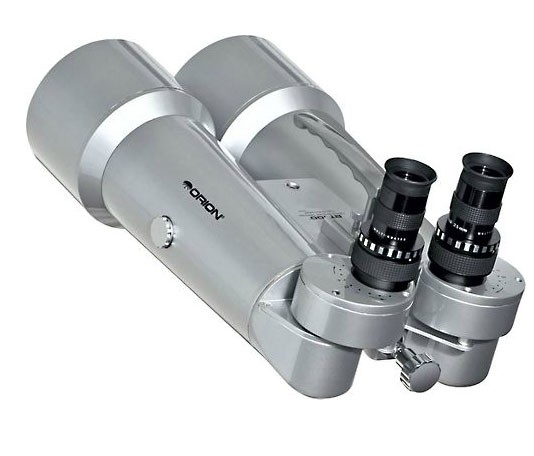 Whilst most bins, including long distance observation binoculars will have a straight through design with the eyepieces in line with the objective lenses, there is a subset of mostly high powered binocular telescopes that have their eyepieces positioned at either 45° or 90° to the body.
The huge advantage of this is that it makes it far easier to point the view upwards and look through them as you do not have to get completely under the instrument to do so.
For more information on these, please take some time to read this article on Telescope Binoculars with Angled Eyepieces
Whilst the size of the objective lens determines to a large degree how much light can enter the binoculars, it does not completely determine how much light enters your eyes, which is far more important. A measurement known as the Exit Pupil gives you the width of the column of light exiting the eye-piece and is calculated by dividing the Objective Lens size by the Magnification of the binoculars.
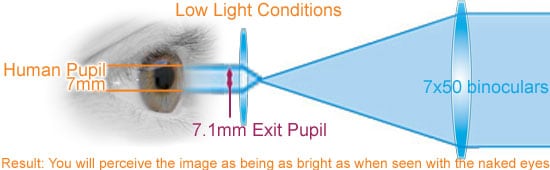
In dark and poor light conditions, the maximum pupil size of a human eye is typically between 5mm to 9mm for people below 25 years of age (usually about 7mm) - this maximum size will also decrease slowly with age. So apart from the very small benefit of ease of use, there is not much point in an exit pupil larger than your pupil. But an exit pupil smaller than your pupil will mean that you will perceive the image as being dark.
Example 1: If you were to use a pair of 7x50 binoculars in very low light conditions:
Because the human pupil is about the same size as the binoculars' exit pupil, the emergent light at the eyepiece then fills the eye's pupil, meaning no loss of brightness in low light conditions due to using these binoculars (assuming perfect transmission). Thus the result is that you will perceive the image as being as bright as if you were to see it with the naked eyes.
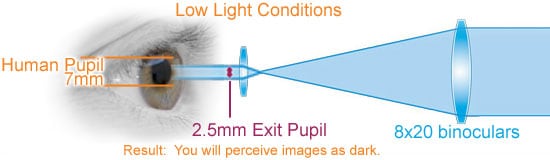
Example 2: If you were to use much smaller 8x20 binoculars in very low light conditions:
Because the 2.5mm exit pupil of the binocular is smaller than the 7mm human pupil, you will perceive the image as being dark.
For more on this, please read my Complete Guide to the Exit Pupil.
So as you can see, for astronomy you are looking for an exit pupil of 5 or more, however with higher magnifications this is not always possible as the objective lenses would have to be massive. So whilst many giant binoculars have slightly smaller exit pupils than the ideal, they are still large enough to provide you with a bright enough image - however this is where the amount of transmittance becomes really important (see below).
Whilst the size of the objective lens and the size of the exit pupil are very important, they are only part of the story when it comes to just how well your binoculars will perform in very low light conditions:
As light travels through a binocular, a certain percentage of that light is lost through absorption and reflection at each air-to-glass surface or inside the prism system itself. The amount of original light available to the observer by the time it exits the eyepiece will vary from as low as 50% to as much as 97%.
This figure is dependent on a number of factors including the quality and number of optical glass elements used in the lenses and prisms, configuration and size of the prisms, collimation of the optical system and the type and amount of anti-reflection and high reflectivity coatings present on the lenses and prisms.
These are really important factors that directly effects the actual brightness of the observed image. The term used to describe this percentage of light that is not lost through the optical system is transmittance.
Good quality binoculars will usually have a transmittance level above 90%, whilst lesser quality instruments that use lower quality glass and coatings will be far lower. With this factor taken into account, it's possible for a 10 X 40 binocular (exit pupil 4mm) with a high transmittance (90%) to actually deliver a brighter image than a 7 X 35 (exit pupil 5mm) with a lower transmittance (70%).
High Transmittance?
The problem is most manufacturers don't publish their binoculars transmittance levels, that is unless they are sure that it outperforms their competitors! So how can you be sure that the binoculars that you get have a high level of transmittance?
Well the best way is to be sure that the binocular you are getting used good quality optical glass and prisms as well as using good quality coatings:
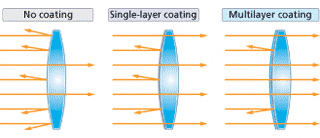 Anti-Reflection Coatings - Most modern binoculars have antireflection coatings on all or at least some of their air to glass surfaces.
 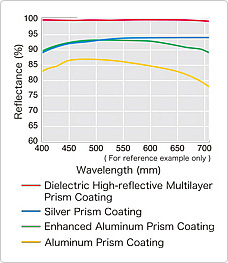 High Reflectivity Coatings on the Prisms - If you plan on choosing a roof prism binocular then you need to look out for what (if any) coatings are on prism to increase light reflectivity. Roof prisms have a number of advantages over porro prisms, but it does have one surface that does not have total internal reflection. It is therefore very important for binoculars' optical performance to raise the reflectivity of this surface. Typically an aluminum mirror coating is used that has a reflectivity of 87% to 93% or a silver mirror coating (reflectivity of 95% to 98%) is used. This light transmission of the prism can be improved by using a dielectric coating rather than a metallic mirror coating. A well-designed dielectric coating can provide a reflectivity of more than 99% across the visible light spectrum. So firstly make sure at least aluminum mirror coatings are used and then depending on your budget you could choose to get higher quality silver or dielectric coatings. Roof prism binocular without high reflectivity coatings on the prisms should be avoided.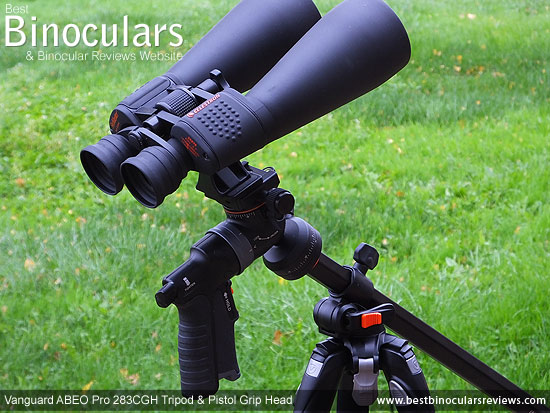
Any pair of binoculars to be used for astronomy with a magnification of more than 10x or 12x and or with objective lenses of 70mm or more will need a mount of some type. The larger and heavier the binoculars, the larger and stronger the mount that you need.
Most large heavy duty camera or video tripods will work for 80mm and some 100mm binoculars. Be sure to compare the weight of the binocular with the maximum load capacity of the tripod, if listed. Unfortunately, this figure is not standardized, nor will it guarantee how well it will work with a large binocular, but it is a place to start.
For 80mm binoculars, look for a tripod that lists a capacity of at least 12lb and 15lb or more is better. Another thing to check is the actual weight of the tripod, light tripods will struggle when loaded with a binocular of equal weight or more. Generally because portability is rarely an issue when it comes to tripods for astronomical binoculars, bigger is better. Quick release plates are a convenient feature, to look for, but check to see if they fit very tightly, if they fit loosely in the tripod head, you will get some unwanted sag.
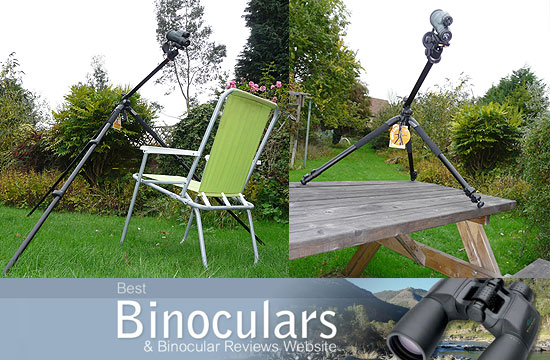
Most standard tripods can be used, but because you are looking upwards, it does mean that the eyepieces will be in an awkward position. To get around this, you either need to make sure you have a tripod that is tall enough so that you can get under it or use a chair and position yourself almost under the tripod.
With traditional tripods this can be a little awkward as the legs often get in the way. I have a couple of Vanguard tripods that have an adjustable central column that you can effectively use to position your binoculars away from the center of the tripod (see image below) so you can more easily position yourself under your optics, which I found worked really well for astronomy.
For more on my personal tripod setup and advice: My Best Tripod for Binoculars: Astronomy & Terrestrial Surveillance
In the past a quality giant binocular would be a very expensive purchase, but there have recently been many more manufacturers producing astronomy binoculars, many of which are made in China, which has brought the prices down.
What is good for us the consumers is that many of the new Chinese optics are now being made to very high optical standards and whilst many may not like to admit it, they perform as well as many far more expensive optics made in the west. Some popular brands include the Oberwerk which have plenty of nice features including collimation screws, Celestron's, Meade's and the excellent Apogee brand of binoculars. All of these offer fantastic quality for the price and bring giant binoculars within reach of most peoples budgets. (Take a look at this review on Cheap Binoculars for Astronomy)
Generally you should be able to find a quality set of 80mm binoculars for around $100 to $300 (£100 - £300), with 100mm models starting at about $400. High end models can cost over $1000, with some fetching more than $4000 and come with interchangeable eyepieces and pier mounting options.
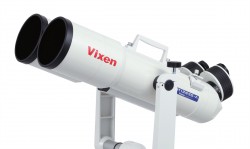
The best giant binoculars for astronomy are not chap and are still made in Japan. The best brands include Fujinon who produce everything from a 70mm binocular to pier mounted telescopes. Vixen and Kowa observation binos and the superb Nikon Astronomy line are considered to be some of the finest binos of their type.
This is obviously only important if you plan to use your binoculars for other uses besides astronomy and most giant binoculars have a poor close focus range. (importance 2/10)
There is not much of a need for an astronomy binocular to be waterproof, water resistant is enough as using them at night can expose a binocular to dew and moisture, which can cause a non-waterproof model to mist up inside the mechanism. I would just like to say though that in general, better quality binoculars tend to be sealed and fully waterproof as well as fogproof and so this is one indicator to look out for if you want to make sure that the binoculars you are getting are of a good quality. (importance 2/10)
Whilst the field of view on astronomy binoculars is not as important as it is for people using their binoculars to view unpredictable, fast moving objects, like birds, it is still fairly important. Field of view is basically the width of the scene that is in view when you look through your binoculars, for a full explanation see field of view in my optics glossary. A wide field of view will make it easier to scan the night sky and find objects when looking through the binoculars.
Everyone talks about magnifications and there is no doubt that high magnifications yield beautiful views of the Moon, planets and fine detail in some deep sky objects. However, many objects in the sky are too large to fit into the field of view of a high power eyepiece. These objects demand a wide field of view to appreciate their beauty and delicate form.
Binoculars with as wide a field as possible might seem best, but you can go too far and wide field of view binoculars may exhibit distorted or out-of-focus star images at the edges of the field. In simple terms lower magnification often means wider field of view. So what you are looking for is the wider field of view as possible in your chosen magnification. For more on this subject you can take a look at this article on Wide Angle Binoculars. (importance 5/10)
Eye relief on a set of binoculars is very important if you use glasses. Take a look at Eye Relief in my glossary for a detailed explanation, but basically it is the distance behind the ocular lenses where the image is in focus. So if you wear glasses, you can't get your eyes as close to the lenses, you need a longer eye relief that basically projects the image beyond the ocular lens on the binoculars. So if you wear glasses, you should be looking for an eye relief of around 15mm or more, to see the full image full image. The down side to long eye relief is that it usually reduces the field of view.
Eye-cups are related to the eye relief as they keep the distance from the oculars to our eyes, but also help keep stray light away from your eyes while using binoculars. Many eye-cups are made from rubber and can roll up or down depending on whether you use lasses or not. The problem with these is that the constant rolling causes the eye-cups to break. Another type are eye-cups that slide rather than roll, but these can be hard to keep in place. The third type are eye-cups that twist up and down and so they can be left at any position from all the way up to all the way down, some even have click stops at regular intervals with the eye relief distance for each stop marked on the cup so you can get the perfect eye relief for your vision. (importance 8/10 if you uses glasses not hugely important if you don't)
Below are some binoculars that I recommend as great astronomical binoculars.
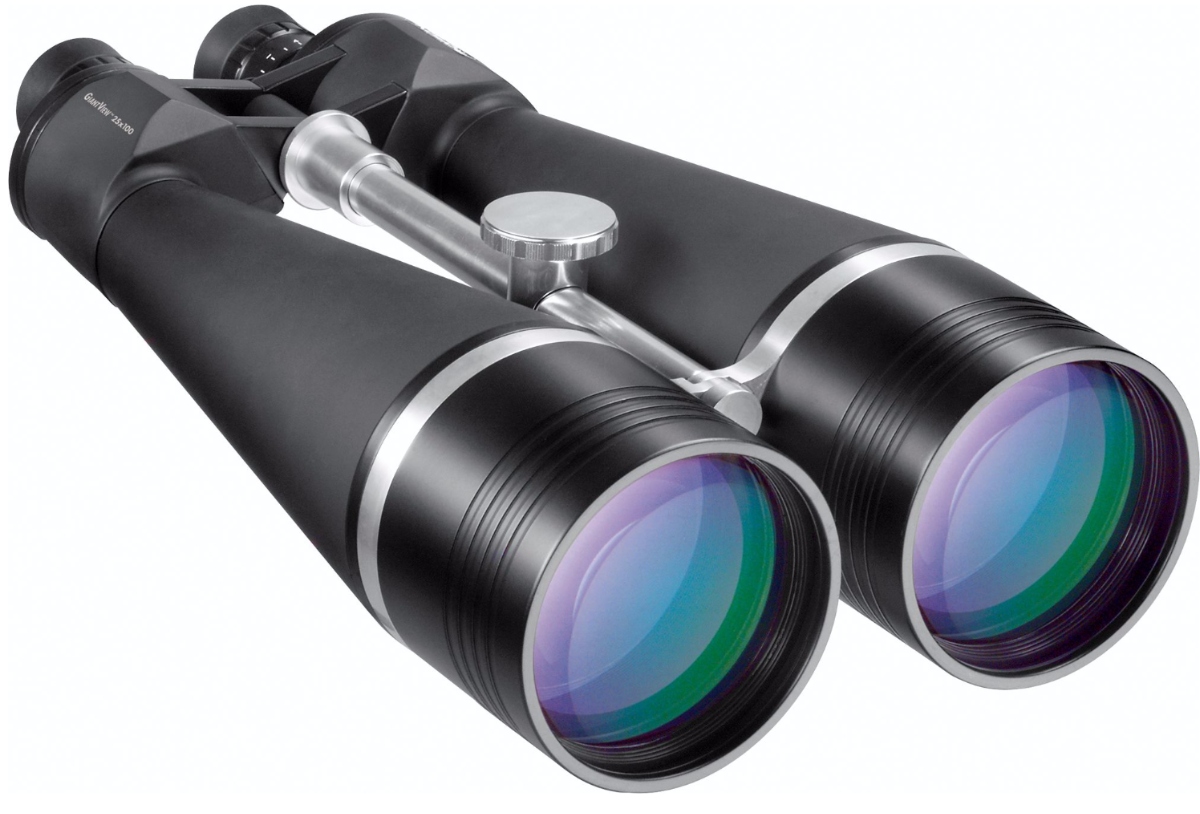 These very large and very powerful 25x10 Orion GiantView Binoculars look to offer an excellent performance to price ratio:
Whilst the massive 25x power is impressive, what I really like is that it is paired with the super sized 100mm objectives.
The result is a large 4mm exit pupil, which means that these have every chance of delivering a detailed AND bright image, which as we have discussed already, for astronomy is especially important.
The next feature worth highlighting is that the optics on the Orion GiantView are Fully Multi-Coated. Therefore every lens surface in the optical system has multiple coatings of anti-reflection material added to them.
The result is increased brightness and image quality because far less light is reflected away each time it has to go through a lens in the system before getting to your eyes.
Price Range
The Orion GiantView 25x100 binoculars are on offer for approximately $360 in the US and £320 in the UK:
|
7x50 binoculars that are designed for marine use, but because of several factors which I go through in detail in the review, including the use of roof prisms and a central focus wheel, I feel make them ideal for many other uses including astronomy, birding, wildlife observation and more.
Price: (3/6) Mid Priced Binoculars | |||||||||||||||
|
|
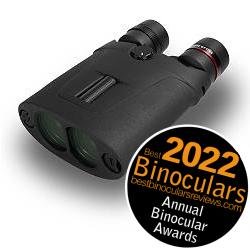
With 2 degrees of correction, these 16x42 Kite APC Image Stabilised Binoculars offer a lightweight and compact alternative to a high-powered binocular and tripod combination making them extremely useful in a wide variety of uses.
Price: (5/6) High Value Binoculars |
|
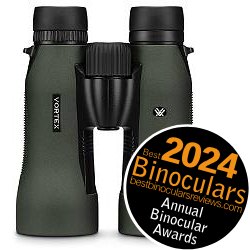
For the most part, these high power, long range binoculars from Vortex manage to achieve that very difficult balancing act of a reasonably priced, reasonably high performance binocular that delivers a bright, high-quality image in combination with a high magnification. As well as the instrument, the level and sheer number of included accessories is also impressive... Price: (4/6) Mid-High Value Binoculars | |||||||||||||||
|
|
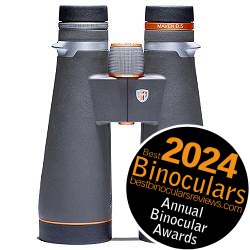
Super high powered binoculars with an equally high level of renowned Japanese optics, coatings, components and a build quality to match. The 18x56 Maven B5 binocular is designed to deliver high quality, highly detailed views a long distances and all at a price well under that of most other "alpha" level instruments. Price: (6/6) Expensive Binoculars | |||||||||||||||
|
|
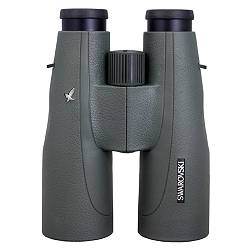
Very high-end, long range, long-distance binoculars, the 15x56 Swarovski SLC HD has gained a significant reputation among hunters, in particular, for its quality and low light performance. My interest came from a desire for a high magnification binocular for coastal and wetland bird watching: Whilst most bird watchers will use spotting scopes, I wanted to see how a high power binocular would perform as an alternative. Price: (6/6) Expensive Binoculars | |||||||||||||||
|
|
Ideal long-range terrestrial and astronomy binoculars, these 15x70 Bresser Spezial Astro SF binoculars combine a fully multi-coated optical system with quality BaK-4 Porro prisms and a tough water and fog proof aluminum housing that, in turn, deliver a quality of view and user experience that is well above average. Far from just being good for stargazing, viewing planets, the moon and general astronomy at night-time, I would also highly recommend these to anyone wanting a higher power binocular to mount onto a tripod and look out over the ocean, a lake or onto the mountains during the day. Price: (3/6) Mid Priced Binoculars | |||||||||||||||
|
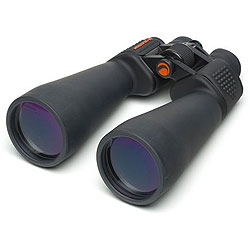 Celestron SkyMaster Binoculars
Celestron's SkyMaster line of large aperture astronomy binoculars offers exceptional performance at a great price resulting in excellent value for money. They are ideal for long-distance terrestrial encounters as well as providing a spectacular view of the heavens.
The larger SkyMaster models (80mm and 100mm ) have been designed by Celestron to meet the special demands of extended astronomical or terrestrial viewing sessions and include features like enhanced structural reinforcement to the main binocular body. and an integral super rigid photo tripod adapter to enable easy attachment to tripods and other fixing devices.
Each SkyMaster model features high quality BAK-4 glass on their porro prisms and multi-coated optics for enhanced contrast and great low light performance.
Sizes Available:
Price & Where to Buy
Depending on the model you choose Celestron SkyMaster binoculars are available from about $70 - $350 (£60 - £350)
These Zhumell binoculars have been specifically designed for looking at the stars and other celestial objects in the night sky. Zhumell offer two main giant binocular models:
Zhumell Astronomy binoculars:
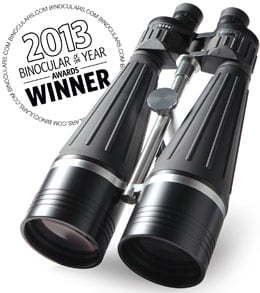 Winner Binoculars.com's Best Astronomy Binocular 2010, 2011 and 2013!
The Tachyon 25x100 Astronomical binocular has a rugged metal construction and comes with a powerful 25X magnification and large 100mm objective lenses and a built-in tripod adapter. This amount of power is more than enough to pick out craters on the moon, features on the planets and even good views of interstellar objects.
What is also interesting is they accept the standard, 1.25-inch astronomical filters to enhance your views of the Moon, planets nebulae and other celestial bodies. Other features include fully multi-coated lenses, quality BAK-4 prisms, individual focus for precise adjustment. They are fully waterproof and nitrogen-purged to prevent any fogging up. They're also backed by Zhumell's 25-year warranty.
Price Range
The Tachyon 25x100 Astronomical binoculars have a list price of $595, but the current retail price is far closer to $300:
Winner of Binoculars.com's Best Astronomy Binocular 2012
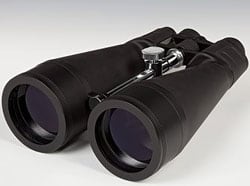 Whilst these SuperGiant astronomy binoculars have smaller objective lenses (80mm) than the Tachyon binoculars from Zhumell, this does mean that they weigh in at just 4.4 pounds, meaning they are small and light enough to use in the field, but of course are best mounted to a tripod and they come with a built in tripod mount that takes any standard photographic tripod for longer periods of observation.
High-performance features include: fully multi-coated optics and BAK-4 prisms, and custom adjustment with center and right diopter focus knobs. They have an extra-large field of view with crystal clarity from edge to edge; Ultra-smooth center focus that's easy to operate, allowing you to pinpoint your subject, Right diopter adjustment so you can fine-tune your viewing.
They are perfect for lunar viewing, locating deep space objects, or super-long range terrestrial viewing.
Price Range
The 20x80 SuperGiant Astronomical binoculars have a list price of $199, but are available from many optical retailers for around $100:
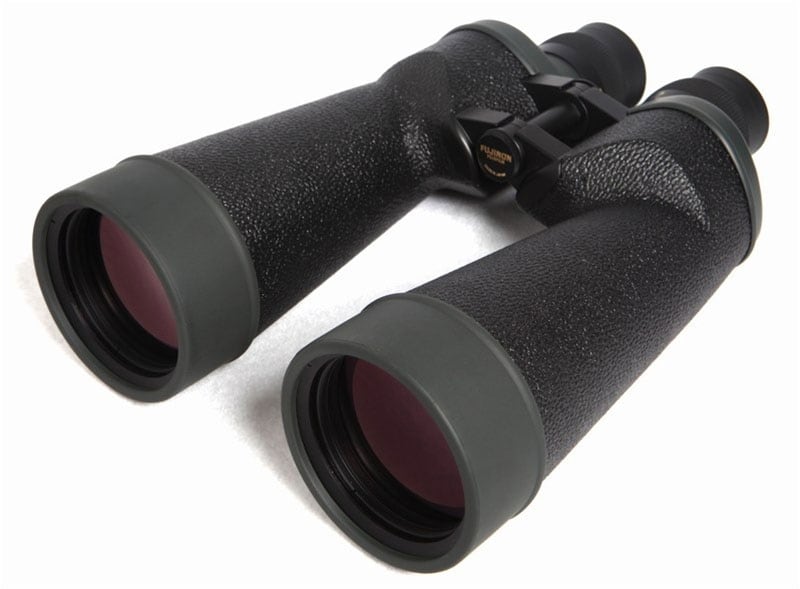 The Fujinon 16x70 FMT-SX binoculars are one of the most highly regarded astronomy binoculars available, at any price. They use a unique optical design that makes for an exceptionally flat field of view, which translates to tight star images very close to the edge of the field of view.
These binoculars feature a fields of view of 4.1º (16x70), which for a 16x binocular is very good and makes them an excellent choice for sky sweeping.
The 16x magnification is enough to pull in additional detail, although the 4.38mm exit pupil is less than ideal, Fujinon applies special anti-reflection coatings to achieve an outstanding light transmission which should at least balance this out to produce a bright enough image for use at night.
The tripod adaptable aluminum body is dry nitrogen filled and O-ring sealed to prevent internal fogging. Each binocular is fully waterproof per the most stringing U.S. MIL specs. In addition to being baffled and blackened to prevent ghost images, every optical surface, including the high-index BAK-4 prisms,, are fully multi-coated.
Fujinon has long been recognized as one of the premier Japanese optical brands and the FMT-SX line is the culmination of years of research and development to produce the ultimate binocular for marine and astronomical observers.
Every binocular they sell must pass a rigorous 14-point inspection that insures a high degree of both optical and mechanical performance, including testing for accurate collimation. Each model is covered by Fujinon's limited lifetime warranty.
Price & Where to Buy
Fujinon Polaris 16x70 FMT-SX Binoculars have a list price of $1210 (£1200), but are available from about $685 (£1200)
View >> All Astronomical Binoculars reviewed by Best Binoculars & Reviews.
Compare >> All Giant Binoculars in the BBR Database
Some advice to a BBR Patreon supporter does not want to set-up and carry about a large telescope and instead is looking to get themselves some large high power binoculars for deep space observation (DSO).
 In this article, I go through how the exit pupil, magnification and field of view are all connected and what you can expect to see with a powerful astronomy binocular.
We also take a look at the idea of using an image stabilized binocular for astronomy, what advantages they bring to the table as well as the downsides.
I also then offer up the idea of instead using a standard "daytime" Spotting Scope for astronomy and go through the pros and cons when compared to using a telescope or binoculars for viewing the night sky and in particular deep space objects.

 Price & Where to Buy
 Price & Where to Buy