Binocular Reviews Home > Binoculars by Use > Best Binoculars for Skiing & Snowboarding
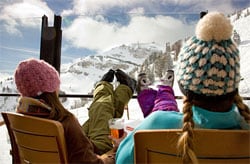 Ski Binoculars
I have to confess that I have never been skiing or snowboarding before so it may seem a little strange that I am writing an article recommending the best skiing binoculars to you! But someone who does ski a lot wrote to me and they were extremely helpful in that they were very specific about what features are required, so it is just down to me to highlight these features and if possible find the binoculars that have all or as many as possible of the required features in order to find the best binoculars for skiing and snow boarding.
Main purposes:
A good pair of binoculars will come in very handy especially if you ski off-piste: Before going down it is preferable, even important to "scout" the downhill terrain to determine an optimal path to go down and identify possible dangers ahead. Also for navigation you need to look around. Even if you use topographic maps, aerial photos and have a local guide, the snow will vary every day, and as such you have to use your eyes (an binoculars) as well.
Secondary purposes:
To enjoy the mountain views,
see some wildlife and see other skiers!
Below are the main features to look for in a good pair of binoculars for skiing:
Weight and Size
The binoculars need to be carried with you when skiing, but often during climbing as well. On top of this most people will probably be flying to their skiing holiday and as such it is obviously preferable to have a binocular that is not only lightweight but compact enough to easily pack into your luggage and ski pack. The obvious choice would be a full compact binocular, but I would also suggest looking at mid-sized binoculars that should still be still small enough, but have the added advantage that they will be much easier to use with thick gloves on.
Waterproofing
It is inevitable, especially with thick gloves on that you will drop your binoculars in the snow or in a pool of melting water. There may also be times that you use them in poor weather conditions so it only makes sense that your binoculars are waterproof.
Fogproofing
This feature is more important to skiers than just about anywhere else as cold air + warm breath + glass = fog! Fogging up of your optics often also occurs when you get rapid changes in conditions. The temperature in the backpack can easily drop to -20°C (-4° F), but when used in the sun it might be up to 10°C (50° F). On top of this once you get back to your cozy log cabin, your optics will go from very cold conditions to very warm ones in a short period of time.
Toughness
You will fall when skiing and often at high speed. On top of this because you will often be wearing thick gloves when using your optics, the possibility of dropping them is higher. A tough pair of optics with rubber armour is thus preferable.
Operation:
The binoculars should be easy to operate with thick gloves on. Look for glasses that have large focusing rings, this is especially relevant if you decide on a compact binocular as opposed to a mid-sized binocular. Binoculars like the Minox 8x33 BL (see below under my recommendations) that have an open bridge design will also be much easier to hold onto with gloves on.
Brightness
Whilst on good days there are not many places on earth where the lighting is better than on top of a snow clad mountain. But when the weather goes bad, it can get very bad and mountains can "white out" and so they should be able to perform well in poor light conditions.
The best performing binoculars in poor light conditions will be ones with large objective lenses, which makes the binocular large and bulky, something that we have already decided is not desirable. Small binoculars that have high quality prisms, lenses and lens coatings will outperform ones with larger objective lenses with inferior optics. So as a compromise I would recommend choosing compact binoculars that have as good a quality optics as you can afford. Binoculars should at least have BAK-4 prisms and be "Fully Multi-Coated", which means that all air to glass surfaces have received multiple layers of antireflection coatings that will assist light transmission.
What will also help with image brightness is not choosing a binocular that has a huge magnification. The higher the magnification, generally the less bright the image is produced by the optics. See below.
Contrast
A good contrast is also essential to asses the terrain. Again high quality optics will help. As a sign of quality look out for binoculars that advertise that they are "Fully Multi-Coated" and not just "Fully Coated" or "Multi-Coated". Not common except on the very best roof prism compacts are Phase Correction coatings on the prism glass that keeps light in correct color phases will enhance resolution, contrast, and color fidelity.
Eye Relief
I am not sure if you would use the binoculars primarily with or without your sunglasses, but it might be the easiest to be able to keep them on and so a pair of binoculars with a good amount of eye relief could be useful. In most cases an eye relief of 14 to 15mm is needed for the average eyeglass wearer to be comfortable. Ideally though you should look for binoculars that have 16, 17 or even 18mm.
Update on eye-relief and glare:
Below is an email I recieved from Ken Blackman regarding using binoculars in snowy conditions and the glare off the snow - as he has far more experience than me in these conditions, I would take his advice and look for a pair that has plenty of
eye-relief so that you can use them with your glasses on. I am not sutre how much eye-relief you would need for goggles - can anyone help?
I read your report on skiing with binoculars with great interest as I have been skiing for the past 30 years, there is one aspect of your report that you basically floated over but which is vitally important and that is using Binos using sunglasses, you did mention that you may or maynot use binoculars with sunglasses? I would say never use them on snow without sunglasses, goggles? or filters, a lot of damage could be done to your eyes if you looked through binoculars at sun drenched white snow, just looking at snow without binoculars that is reflecting the sun is bad, everyone who skis wears either sunglasses or goggles because of the risk of snow blindness, I would put it in the same categary as looking into the sun, have you tried using binoculars with goggles? is it possible as the eye relief with goggles is immense? I feel you should edit your report with this danger in mind.
Magnification
Whilst it is always tempting to get the highest magnification possible, this is not always desirable. High powered magnifications make it much harder to keep the image that you are looking at through your optics still and generally the higher the magnification, the less bright the view will be through your optics. Another down side to a high magnifications is that it usually results in a narrower field of view. A good wide field of view is always better when using your optics to scan large areas. I would recommend sticking to around 8x - 10x magnifications for skiing binoculars.
Field of View
A wide field of view will make it much easier to scan the terrain. Not massively important in this context, but if you have a choice between two binoculars that are very similar, go for the ones with a wider field of view.
Other Important Features
So to sum up we are looking for lightweight, tough, compact or mid size binoculars that are fog and waterproof. They should have good to excellent quality optics with a magnification of around 8x to 10x and be easy to use with thick gloves on!
Below are a few pairs of optics that I have researched and have as many of the requirements listed above as possible and as such I feel would make great ski binoculars:
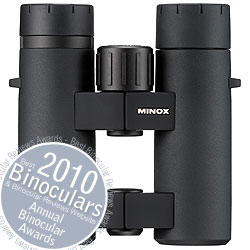 Some of the best high quality value for money mid-sized binoculars that I have ever reviewed and have many features that make them ideal for skiing:
Body Design
The open bridge design will make them easier to handle, especially with thick gloves on and the focusing ring is also large enough to make it easily accessible. They also feature tethered objective lense covers that will protect your optics in your bag and you won't loose them in the snow when taking them off to use.
Waterproof & Fogproof
These are fully waterproof to a depth of up to five meters. They have also been "nitrogen purged", which means that the air inside the binocular has been replaced with nitrogen gas, this prevents the interior optical surfaces from fogging up due to rapid temperature changes or in areas that have high humidity.
Quality Optics
This 8x33 Minox has fully Multi-coated Lenses which means that ALL the air to glass surfaces on the lenses and prisms are multilayer-coated with anti-reflective coatings. What this does is help increase light transmission across the entire field of view. Bak-4 roof prisms are used meaning they are made of superior optical glass that produces clearer images. As well as this the prisms also have a Phase-correction coating that help to reduce the phase shift of light caused by phase differences arising from total light reflection on a roof surface! Sounds complicated, but basically it keeps the light in correct color phase and has the result of reducing the loss of image resolution to maintain high-contrast images. It is a feature that is only found on high end roof prism binoculars and is what we are looking for in the best skiing binoculars.
Eye-relief
There is an excellent 17.5mm of eye relief which easily makes it into the category of a long eye relief binocular.
Price Range
These are "High Quality" optics and as such they cost between $300 - $500 (£300 - £500). This is way below the very top of the range binoculars like the Nikon 8x32 EDG and Swarovski 10x32 EL's which means that for me they may excellent value for money. Think of it this way, the Nikon EDG's are about double the cost of these, whilst the Swarovski's are almost 4x the cost. But are they 2x or 4x better? No way!
Read full Review - Read my full review of these binoculars.
If the price of the Minox 8x33 BL above is a little too steep, take a look at either the Nikon 10x36 Monarch ATB DCF Binoculars or the Barr & Stroud 8x32 Sierra Binoculars below.
All the glasses below are either Compact or Mid Sized binoculars that are both water and fogproof with a magnification of around 8x to 10x and come with good to excellent quality optics:
|
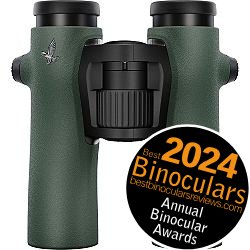
Like most good 8x32 binoculars these are very versatile and well-suited for a wide range of activities and viewing purposes. But added to that you get an exceptional optical performance, a beautiful ergonomic design, the best materials & robust build, are these the best mid-size binoculars ever made? Price: (6/6) Expensive Binoculars | |||||||||||||||
|
|
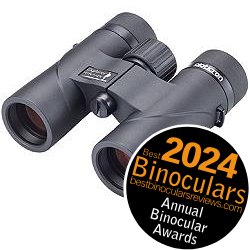
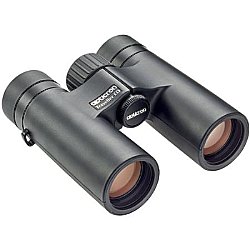
Excellent quality and bright image, combined with an extremely wide view and small, lightweight body, these 8x32 Opticron Explorer WA ED-R binoculars are an ideal option for a wide range of uses where you want something a bit smaller than an 8x42, but better low light performance than a full compact binocular. Other highlights include ED glass lenses, dielectric coated, and phase-corrected BaK-4 roof prisms, fully multi-coated optics, and a tough waterproof chassis. Price: (3/6) Mid Priced Binoculars | |||||||||||||||
|
|
The double-hinge, roof prism design, combined with a tough exterior and fully water and fog proof chassis makes these a true pocket sized binocular that just ask to be taken anywhere and everywhere you go. Other highlights include a fully multi-coated optical system, wide field of view, excellent close focus distance and with it's Click-Lock attachments system probably the best neck-strap I have ever seen on a compact. Price: (3/6) Mid Priced Binoculars | |||||||||||||||
|
|
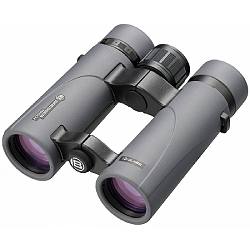
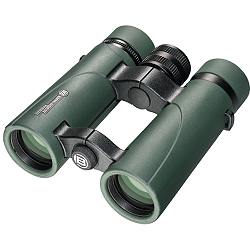
This Pirsch ED binocular from the German brand Bresser incorporates a very good level of optics and body components into a mid-sized, easy to carry chassis, all the time keeping half an eye on the cost, with the result being an instrument that offers a very good performance to price ratio. Main optical highlights include ED Glass lenses, a Fully Multi-Coated optical pathway and Dielectric, Phase Corrected BAK-4 Roof Prisms... Price: (4/6) Mid-High Value Binoculars | |||||||||||||||
|
|
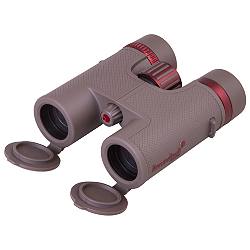
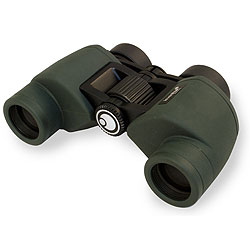
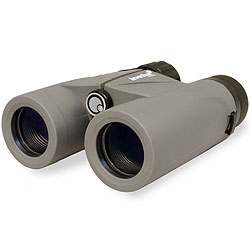
Mid-sized binoculars with a mid-level price tag, but with many higher-end features make these Levenhuk binoculars great value for money. Highlights include ED glass lens elements and very highly reflective dielectric coated prisms that are also phase corrected. The fully waterproof body has a metal focus wheel, metal diopter adjustment ring, metal eyepiece housings and, metal eyecups. All of these are not something that you typically see on a binocular costing less than $300 Price: (3/6) Mid Priced Binoculars | |||||||||||||||
|
|
Mid-range 8x32 binoculars have an excellent performance to price ratio making these mid-sized Bresser Pirsch binoculars are ideal for for the more serious observer looking for an easy to carry, but relatively high performing binocular at a more than reasonable price Highlights include a fully multi-coated optical system with phase coated Schmidt-Pechan roof prisms, a wide field of view and an excellent level of eye-relief. Price: (3/6) Mid Priced Binoculars | |||||||||||||||
|
|
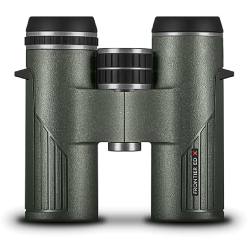
Top-end, mid-sized 8x32 binoculars offering an incredible performance to price ratio, these Hawke Frontier ED X binoculars have many alpha level features such as Dielectric, phase corrected Schmidt-Pechan roof prisms, ED glass lens elements and a magnesium alloy chassis. In terms of their optical specifications, this 8x32 binocular from Hawke Sport Optics features an incredibly wide FOV which will please birders and general wildlife enthusiasts alike... Price: (4/6) Mid-High Value Binoculars | |||||||||||||||
|
|
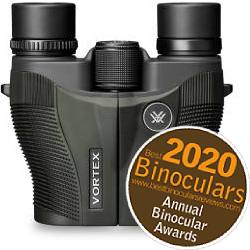
These reverse Porro prism compact Vortex binoculars perform at a level that way exceeds their budget level price tag. Highlights include an image quality and brightness that really surprised me and a build quality with a level of components that matches and even surpasses many mid level instruments. Price: (2/6) Low Cost Binoculars | |||||||||||||||
|
|
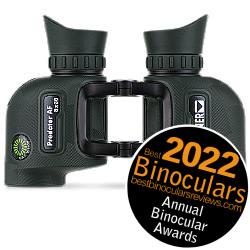
Designed specifically for hunting, these Steiner Predator AF binoculars feature special lens coatings that enhance the colors of game and thus help them to stand out from their environment. These porro prism binoculars also have an always in focus optical system that ensures you are able to quickly locate and then follow wildlife. The small shape and open bridge design is extremely comfortable to hold and ideal for travel as well as those who carry a lot of other gear. Price: (4/6) Mid-High Value Binoculars | |||||||||||||||
|
|
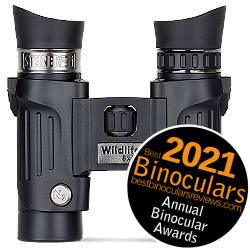
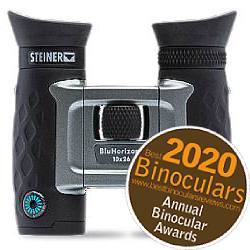
Compact Steiner roof prism binoculars with the double hinge design makes them a true pocket binocular ideal for lightweight travel and uses like skiing and hiking. The sunlight adaptive optical system reduces glare and makes for a less washed out and more vibrant image in very bright light conditions. Price: (3/6) Mid Priced Binoculars | |||||||||||||||
|
|
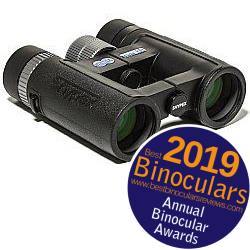
These high performance, mid-size Snypex binoculars offer the user greater image detail at longer ranges and are an ideal instrument for travel, safaris, hunting and general nature and wildlife observation. Top specification optical components include APO lenses with ED glass elements, Bak-4 Dach roof prisms with phase correction and dielectric coatings that ensure the best possible views... Price: (4/6) Mid-High Value Binoculars | |||||||||||||||
|
|
Very high quality mid-sized 10x32mm binoculars that will appeal to the enthusiast and serious user and makes an ideal high end optic for any travel related adventure including safaris, hiking or backpacking. Major highlights include an extremely high level of optical components that combine well to produce an image of superior quality. Add to this a very wide field of view, great close focus distance and plenty of eye-relief and many other features... Price: (4/6) Mid-High Value Binoculars | |||||||||||||||
|
|
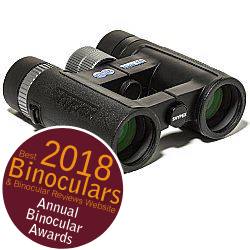
These 8x32 Snypex Knight D-ED binoculars come about as close as any as being the perfect general use mid-sized instrument. The highest quality optical components like APO lenses with ED glass elements, Bak-4 Dach roof prisms with phase correction and dielectric coatings all come together to deliver an image that is as good as many high quality full sized instruments... Price: (4/6) Mid-High Value Binoculars | |||||||||||||||
|
|
These low cost binoculars from Levenhuk deliver a good image quality and high level of brightness for a mid sized (32mm) bin at this price level, which almost certainly is a result of the relatively simple but good quality BaK-4 porro prism design combined with fully multi-coated optics. Add to this a very wide field of view, tough water and fog proof exterior and you have a good all-round mid-sized take anywhere binocular with a really good value to performance ratio. Price: (2/6) Low Cost Binoculars | |||||||||||||||
|
|
Ideal for occasional, casual use or as a first time bin for an older child these cheap mid-sized binoculars from Levenhuk come with a well balanced, good looking and fully water/fog proof shell. Internally the have multi-coated optics, silver coated Bak-4 roof prisms. Price: (2/6) Low Cost Binoculars | |||||||||||||||
|

 Price & Where to Buy
 Price & Where to Buy