Binocular Reviews Home > Binoculars by Use > Airoplane Binoculars
>> Skip the blurb, show me the best plane binoculars
Aircraft Binoculars
In this section of the site, I take a look at two different types of uses of binoculars in connection with aircraft:
1) Aircraft Spotting
2) Binoculars for use Inside an Aircraft
 Aircraft Spotting
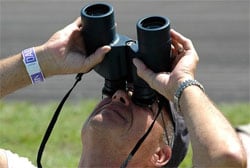
was recently asked a question from someone looking to get a pair of binoculars for plane spotting and I myself have often enjoyed going to air days in the summer where, in my opinion, a good set of binoculars are essential in getting the "best seat in the house." So I have decided to put together this page to help you choose the best aeroplane spotting binoculars.
So just what makes a good pair of binoculars for airplane spotting and what features do we need to look out for?
How to choose Binoculars for Aircraft Spotting
Even within the fairly constrained world of aeroplane binoculars there are a couple of different options open to you and unless you plan on getting more than one pair you need to ask yourself a few questions to ensure that you get exactly the right optics for your specific needs:
Will you mostly be using your binoculars for
If you plan on using your binoculars exclusively for spotting planes flying at full altitude and want a pair that are strong enough to spot and recognize the airline and plane type then obviously a pair of binoculars with a very high magnification is key.
High Magnifications
There are a few down sides to using binoculars with very high magnifications, which include image shake and a reduced field of view:
Image Shake
As you increase the magnification on a pair of binoculars it becomes harder and harder to hold the image that you see through the optics still (any hand movements become more and more magnified). This "image shake" can get very annoying, make it more difficult to keep what you are looking at in view and can make it hard to identify the plane that you are spotting.
As a general rule of thumb, any magnification over 10x is considered reasonably high for hand-held binoculars, with 12x high powered and 20x or 25x considered very high powered. Almost everyone will quite easily be able to hand hold a 10x and 12x bin without too much trouble and be able to keep the image still enought to follow and observe a plane.
The larger 20x and 25x bins will also almost certainly also have larger objective lenses, which makes the device larger and heavier. So as well as making it harder to keep the image still, you now also have to hold up a heavier weight, which can get tiring, especially if you are always looking up above your head. I can quite easily hold the Celestron SkyMaster 25x70 Binoculars and keep the image still enough to view planes for short durations, but over longer periods, you really do need some sort of support.
There are two ways of reducing the image shake that are worth considering:
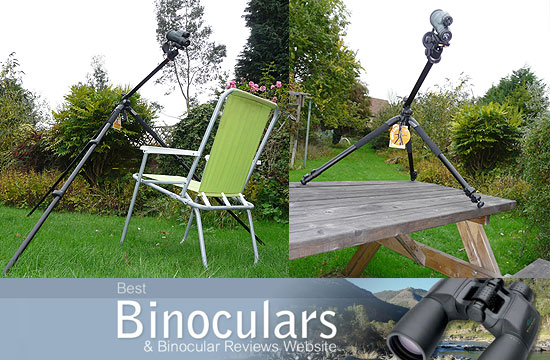
So what magnification you choose to get will depend on what or if any method you plan to use to reduce or eliminate image shake. If you plan to hand hold your binocular all the time, I would suggest not going higher than 12x at an absolute maximum. Image stabilization binoculars are available in magnifications up to about 20x and you can get binoculars for a tripod with magnifications up to 25x, but I would suggest that 15x is adequate.
Zoom Binoculars
Personally I tend to stay away from zoom binoculars as the view through the ones that I have reviewed are a little fuzzy in comparison to high end fixed magnification binoculars and they often have a much smaller field of view. If you want variable magnification a better option is to choose ones that accept different sets of eyepieces to change the magnification. For more and why I don't recommend them, take a look at my article on zoom binoculars.
Field of View
In general as you increase the magnification on a pair of binoculars your field of view (the width of the image that you see through your optics) reduces. A wide field of view is most important to those needing to scan wide areas or for those wanting to follow fast moving or erratic objects like birds. So in general I would not worry too much about the field of view for plane spotting at high altitudes, but if you have the choice between two that are similar, go for the one with a wider field of view as a wider view definitly makes it easier to locate and follow the airplane, especially if you are using a tripod.
Size of Binoculars
Binoculars with large objective lenses take in more light and therefore in general produce a brighter image which is optimal. The down side is obviously that the binoculars become larger and heavier. If you plan on fixing them to a tripod this is not really a problem especially if you don't need them to be portable. Hand holding heavy binoculars and looking high into the skies can get tiring over longer periods and would suggest not going larger than 50mm objective lenses if you plan on using them without a tripod.
Below are binoculars that I feel would be ideal for viewing planes at higher altitudes:
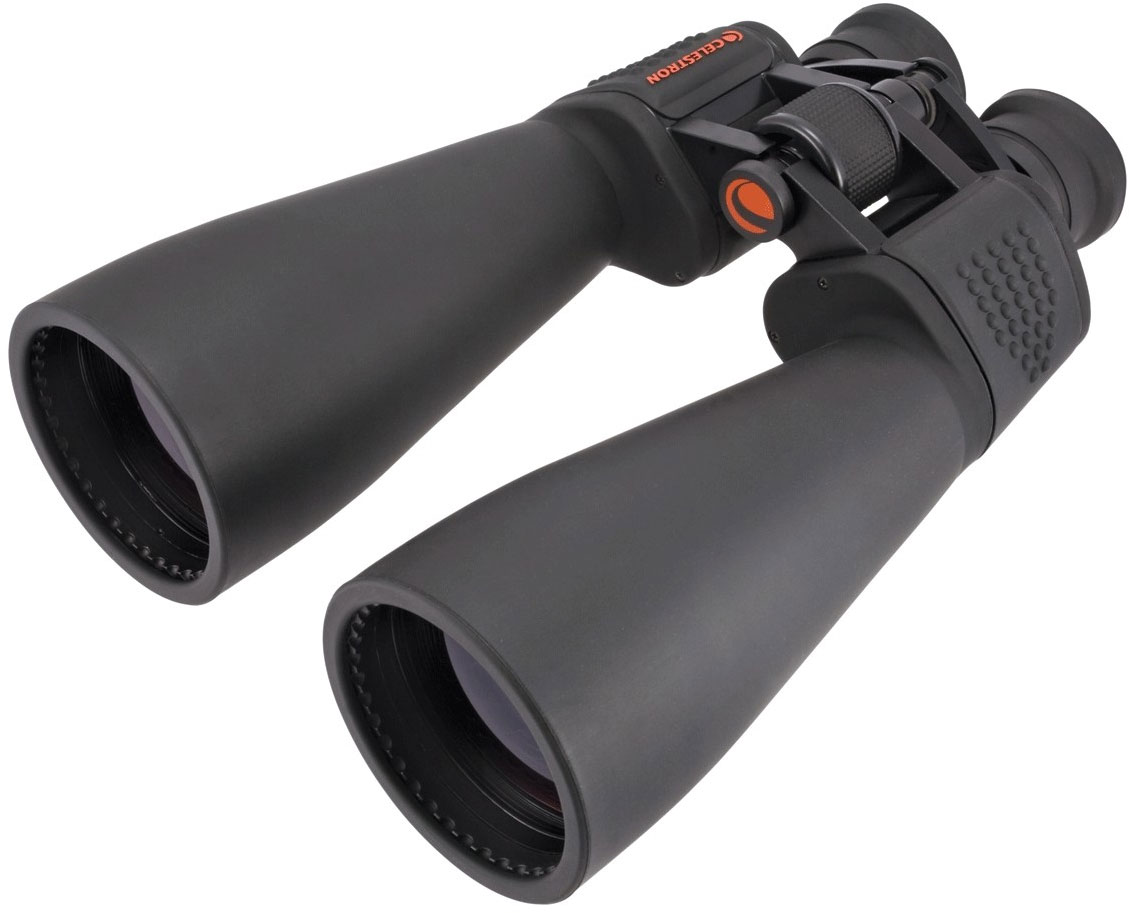 The low cost 25x70mm Celestron SkyMaster binoculars come with a very high powered 25x magnification wand large 70mm objective lenses and whilst the can easily be attached to a tripod (they come with a tripod adapter) for the most stable views, they are also light and small enough for most people to be able to hand hold them as well.
Their field of view is 141t wide @ 1000 yards (47m @ 1000m), which for a binocular with such a high power is also pretty good.
Read My Full Review for all the details on what I believe is a great cheap high altitude plane spotting bin, general long ranger observation as well as ideal for viewing the heavens at night.
Price Range
Last time I checked, the Celestron SkyMaster 25x70 Binoculars had a price tag of about $90 in the US or £80 in the UK.
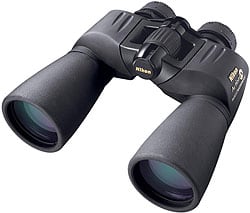 The obvious selling point to these Action Extreme binoculars are their very powerful 16x magnification for long distance observation or surveillance. With any magnification this powerful, I highly recommend using some sort of stabilization to keep the image still and what I do like is that according to the Nikon website, these 16x50 binoculars come with the tripod adapter included that will enable you to easily attach the binoculars to almost any photo tripod. I have not always seen this mentiond on retailers sites, so just check. If they don't come with one, don't worry as they use the standard ¼-inch threading and most tripod adapers that are fairly innexpensive will work fine, or you can buy Nikon's own adapters. Read more about Binocular Tripod Adapters.
Main Features
Price Range
The Nikon Action Extreme 16x50 ATB Binoculars are available for around $180 / £180
More Options: Buy & Compare Prices for High Power Bins:
 Long Distance binoculars on Binoculars.com
More Information
For mor information as well as a few binoculars that I recommend for higher altitudes, take a look at my article on the Best Binoculars for Plane Spotting.
Alternatives
As an alternative to aviation binoculars that is worth considering is using a spotting scope and a tripod as these generally have a much higher magnification than binoculars. The down sides are that they usually have a much narrower FOV and because of their size are less portable than bins.

I cannot stress just how important it is to have a good pair of binoculars at an air show. It makes all the difference and is like the difference between the very cheapest seats at the back of the arena and having ring side seats. You will see so much more of the show - don't go to an air show with out a pair! So what are the best binoculars for airshows?
FOV vs Magnification
Whilst magnification is important, it is less so than high altitude observation and I feel that because most of the displays will be at far lower levels and most planes will be moving much faster through the sky you will want and need a much wider field of view to ensure that you can quickly locate and keep the plane in your view.
Size
Portability is also key as you will be carrying your binoculars to the event and as you wander around. For most people a tripod will also be less feasible and so we need to keep the magnification levels to a level that are suitable for hand holding without too much image shake.
So I would say an ideal binocular for an airshow would be fairly lightweight and compact, have a reasonably wide field of view and a magnification that gets you close enough to the action without making the image shake too great unless you are using image stabilization binoculars:
Ideal airshow binoculars would therefore in my opinion have objective lenses between 22mm and 45mm, have a field of view as wide as possible, but more than 260ft at 1000 yards and a magnification of between 8x and 12x - See below:
For me a general use binocular would be very similar to that of one that you would take to an air show, it should be flexible to handle most situations. So should have a magnification powerful enough to identify planes at large distances, but still be steady enough to use in the hands and have a wide enough field of view to make them useful for viewing closer faster moving objects. Below are some binoculars that are ideal:
Below are some binoculars that I have reviewed and have a magnification of 10x or greater, a field of view greater than 260ft at 1000 yards and objective lenses between 22mm and 45mm:
|
Aimed at those more serious about wildlife observation, birdwatching, and outdoor adventures, these very high-end Hawke binoculars feature APO lenses with ED glass elements, providing bright, excellent-quality views with minimal chromatic aberration. The compact design, magnesium chassis, and mostly metal components ensure durability. Price: (5/6) High Value Binoculars | |||||||||||||||
|
|
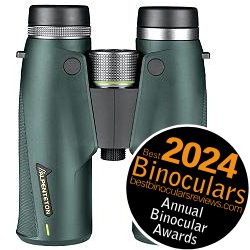
The Alpen Teton binocular incorporates many metal components and magnesium chassis that protect very high-end optics at a price well below what you would usually expect to pay for an Abbe-Koenig bino. The result is a tough, versatile instrument that delivers a high-quality image and what I consider an excellent low-light capability for a 10x42 binocular. Price: (5/6) High Value Binoculars | |||||||||||||||
|
|
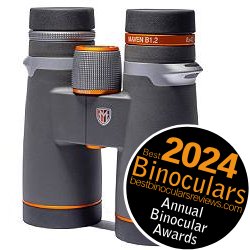
Updated from the B.1 series, the 10x42 B1.2 binoculars are smaller, more lightweight, come with improved optics, a much wider field of view, longer eye-relief, a closer minimum focus distance as well as other improvements. The fact that Maven Optics has managed to do all this and keep the cost at the same level results in a high-performance binocular with an incredible performance to price ratio. Price: (5/6) High Value Binoculars | |||||||||||||||
|
|
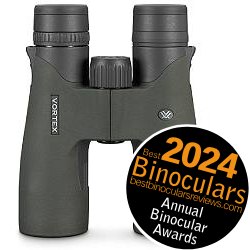
Ideal for nature lovers, wildlife observers and hunters alike. Vortex Optics new flagship binoculars, the Razor UHD uses the very highest level of body and optical components and coatings to deliver a truly superb performance. Highlights include an APO Lens System, Phase Corrected Abbe-Koenig Roof Prisms that deliver an extremely high quality image with a wide field of view. Optics are protected by an Argon purged, waterproof Magnesium Chassis. Price: (6/6) Expensive Binoculars | |||||||||||||||
|
|
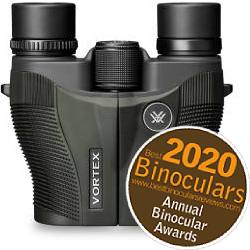
These reverse Porro prism compact Vortex binoculars perform at a level that way exceeds their budget level price tag. Highlights include an image quality and brightness that really surprised me and a build quality with a level of components that matches and even surpasses many mid level instruments. Price: (2/6) Low Cost Binoculars | |||||||||||||||
|
|
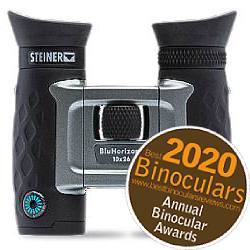
Compact Steiner roof prism binoculars with the double hinge design makes them a true pocket binocular ideal for lightweight travel and uses like skiing and hiking. The sunlight adaptive optical system reduces glare and makes for a less washed out and more vibrant image in very bright light conditions. Price: (3/6) Mid Priced Binoculars | |||||||||||||||
|
|
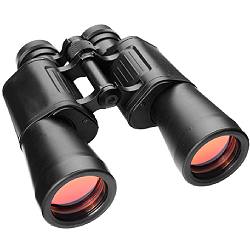
Made in Russia for Levenhuk by the Kazan Optical-Mechanical Plant which also supplies the Russian army, these classically shaped porro prism binoculars take you back in time.
Made using an aluminium chassis they feature fully multi-coated optics and a ruby coating on the exterior lenses. Price: (3/6) Mid Priced Binoculars | |||||||||||||||
|
|
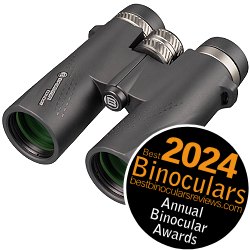
Aimed at the serious, but price-conscious outdoor enthusiast, the new Condor binocular from German brand Bresser combines a high quality exterior with optics that can perform well even when the light levels get poor. Highlights include a tough fog & chassis with aluminium focus wheel, eye piece housings and diopter adjuster as well as a fully multi-coated optical system. Price: (3/6) Mid Priced Binoculars | |||||||||||||||
|
Below are a very interesting short documentary that looks at the lives of a dedicated group of enthusiasts who live their weekends beside the runways of Sydney's Mascot Airport.
 Related Articles & Further Reading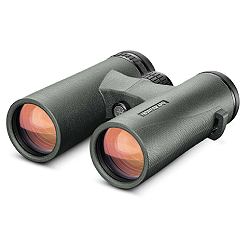
 Price & Where to Buy
 Price & Where to Buy