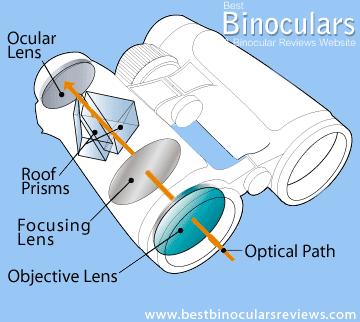
If you don't know your Diopter Adjuster from your Ocular Lens or don't know the difference between Porro Prism and Roof Prism binoculars, this article will help. Here are the most commonly used terms when talking about binoculars and what they mean. This will in tern help you make an informed decision when purchasing the correct binoculars for your specific needs.
Abbe-Koenig
An Abbe-Koenig prism is named after Ernst Abbe and Albert Koenig and is a type of reflecting roof prism, used to invert an image (rotate it by 180°), but not change the handedness and are thus used in binoculars and some telescopes.
The prism is made from two glass prisms, which are optically cemented together to form a symmetric, shallow V-shaped assembly. Light enters one face at normal incidence, is internally reflected from a 30° sloped face, and then is reflected from a "roof" (German Dach) section (consisting of two faces meeting at a 90° angle) at the bottom of the prism. The light is then reflected from the opposite 30° face and exits, again at normal incidence.
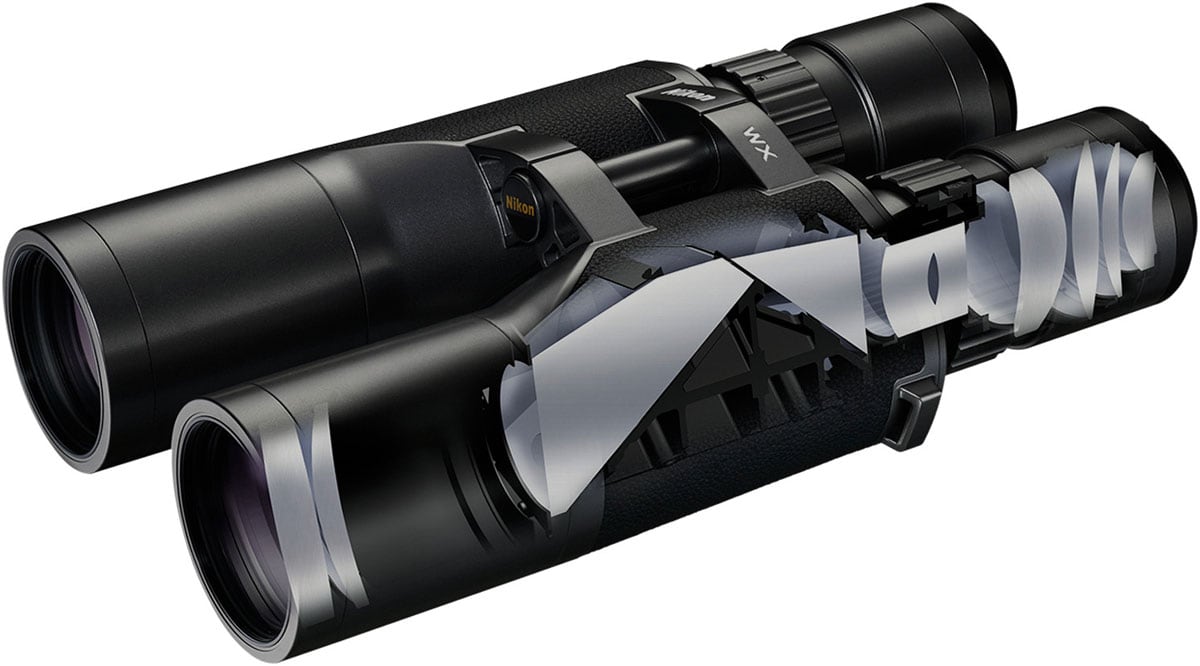
The overall effect of the internal reflections is to flip the image both vertically and horizontally. This produces a 180° image rotation (without changing the image's handedness) and allows use of the prism as an image erecting system.
Whilst less compact, than the more commonly used Schmidt-Pechan design of roof prism, all surfaces on the Abbe-Koenig prisms reflect 100% of the light that hits them and thus they do not require highly reflective coatings to be used. The longer focal length of the Abbe-Koenig is also prized as I am led to believe that they can show less aberrations (color & spherical aberration) than an equivalent level Schmidt-Pechan one.
However as with the Schmidt-Pechan and unlike the Porro Prism design, they do still require phase correction coatings to correct phase shift.
Abbe Number
Also known as Abbe constant, the Abbe number of a glass and other materials quantifies the amount of dispersion (variations in index) for a specific spectral range. A high Abbe number means that different wavelengths will have nearly the same index of refraction in that medium, yielding less separation between wavelengths of light and thus generally gives less color dispersion and reduces color aberration. Also, certain glass types have different transmission wavelength regions. The Abbe Number of a glass and the index of refraction are used by designers as degrees of freedom when designing systems.
Aberrations
To ensure the best possible view through a pair of binoculars with the brightest and sharpest image, correcting lens aberration is vitally important. The best optics are designed to correct the following aberrations: Spherical Aberration, Curvature of Field, Coma, Distortion, Astigmatism and Chromatic Aberration.
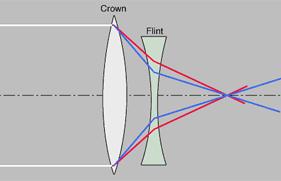 Achromatic Doublet lens
An achromatic doublet lens is designed to limit the effects of chromatic and spherical aberration. This is achieved by the use of a strong positive lens made from a low dispersion glass like crown glass coupled with a weaker high dispersion glass like flint glass can correct the chromatic aberration for two colors (typically red and blue). Such doublets are often cemented together (called achromat doublets) and may be used in compound lenses. An achromat doublet does not completely eliminate chromatic aberration, but can eliminate it for two colors (typically red and blue). Cemented doublets of this type are a mainstay of lens design.
Another approach to chromatic aberration reduction is to use two positive lenses separated by one half the sum of their wavelengths. Two equal positive lenses are used in eyepieces like the Ramsden eyepiece for correction.
Chromatic aberration for three colors can be eliminated with and apochromat triplet.
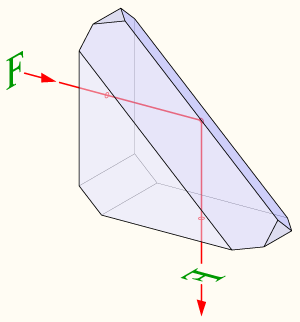 Amici Prisms
Amici prisms are one of the "roof prism" or "right angle roof prism" designs used in optics. An Amici roof prism is named after it's inventor, the Italian astronomer Giovanni Amici and is similar to the Schmid design. They revert and invert the image as well as bend the line of sight through a 90° angle (They deviate a beam of light by 90° while simultaneously inverting the image). They are excellent as prism diagonals in optical systems, because they erect the inverted image. Also ideal for use in spotting scopes, and any optical instrument where it is desirable to take an inverted image from an objective, turn it right side up, and bend it through a 90° angle, to maintain the correct visual orientation.
Anomalous Partial Dispersion Glass
This ED (extra-low dispersion) glass which is also sometimes referred to as HD glass has a non-linear refraction of color wavelengths.
The benefit of this property is that it enables the lens designer to combine different glass types to get a wanted level of color correction and thus reduce or even completely get rid of secondary (residual) chromatic aberration, something that cannot be achieved with the use of conventional optical glass.
Aperture
In optics, an aperture is a hole or an opening through which light is admitted. However when we speak of aperture and binoculars, aperture refers to the diameter of a binoculars' objective lenses and is measured in millimeters. The aperture is the second number represented when describing a set of binoculars. Example: In the Steiner 8.5x26 Wildlife Pro Binoculars, 26 would represent the aperture. It is an important number when considering how well a pair of binoculars will work in low light conditions. See Exit Pupil for more information.
Apochromatic Lens (APO)
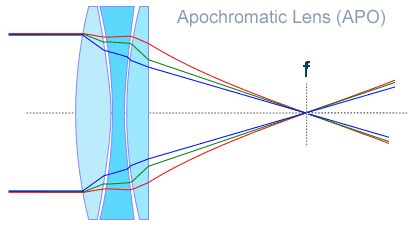 An apochromat, or apochromatic lens (apo), is a lens usually of three elements and brings light of three different frequencies to a common focus. It has better correction of chromatic aberration and spherical aberration than the much more common achromat lenses.
For more read my complete guide to Apochromatic (APO) Lenses in Binoculars
Apochromatic Triplet
Apochromatic Triplet lenses (see Apochromatic-Lens above) use three lens elements to reduce chromatic aberrations, and have improved correction levels than achromat doublets.
Aspheric Lenses
An aspheric lens is simply a lens with a surface which is not perfectly spherical or not perfectly convex or concave or, to put it another way, you can find different areas on the lens with different degrees of curvature. The asphere's more complex surface profile can reduce or eliminate spherical aberration and also reduce other optical aberrations compared to a simple lens.
By using different degrees of curvature, a single aspheric lens can also can often replace a much more complex multi-lens system using standard spherical lenses, resulting in a smaller, lighter instrument and/or a cheaper one. On the other hand, there is nothing automatic about the performance and quality of a lens just because it has the aspheric label. For instance, many low end optics use aspheric lenses that are poured into a mold, making them cheaper to produce than a conventional ground lens. At the other end of the quality spectrum are aspheric lenses which are ground just like a spherical lens but only in much more sophisticated shapes. These are very difficult and expensive to produce, but the results can be incredible.
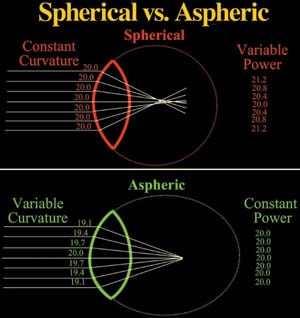 Aspheric vs. Spherical: (see image on the right) Spherical lenses have a constant curvature on their surface, much in the same way that a sphere has a constant curvature. However, the power of the lens at different points is variable, resulting in relative defocus of more peripheral light rays. Due to this constant curvature, these lenses are easier to make; however, their optics are worse. A perfectly aspheric lens on the other hand has a variable curvature but a constant power even at the periphery of the lens. This results in the same focus of all light rays, both central and peripheral. These lenses are more difficult to make, but their optics are better.
BaK-4 prisms
Standing for Baritleichkron which is a Barium Crown glass, BaK-4 prisms are in most cases considered superior to BK-7 prisms as they have a higher refractive index (1.569) and so has a lower critical angle. The result is that that less peripheral light is "lost" through the non-total internal reflection.
It has been pointed out to me that many Chinese optical devices labeled as having BAK4 prism glass are not actually the same as the Schott BaK-4 ones. The Chinese BAK4 is not Barium Crown, but rather a phosphate crown and has a refractive index of 1.5525 and a dispersion of -0.0452 (Schott: -0.0523) and also has a higher permitted bubble count than Schott BaK-4 glass.
BK-7 prisms are usually found in lower priced binoculars and are made from a very fine borosilicate crown glass. These are satisfactory, but for the most part are said to be inferior (for binoculars) to the BaK-4 prisms made from barium crown glass, a finer and higher density glass that can reduce internal light scattering and so has the potential to deliver sharper images.
Optical glass quality varies widely between models, this is one of the many reasons for the wide range in price that you will find in the stores ($30 - $2000+). The less expensive binoculars generally are manufactured with BK-7 prisms.
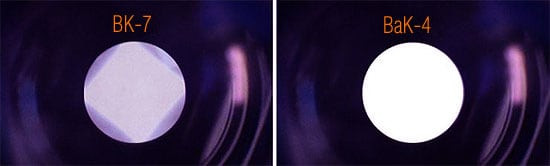
If you move your binoculars about 30cm away from your eyes and try and look through them, you will then be able to see the exit pupil and this is where you can sometimes see the difference between BK-7 and BaK-4. If the binoculars have BK-7 prisms, you may notice a squared off side to the general roundness of the image. BaK-4 prisms show a truer round, which translates to better light transmission and edge-to-edge sharpness.
SK15 prisms: Prisms of very high quality SK15 glass that enable minimization of undesirable internal reflections and thus provide a crystal clear image with the best contrast.
According to Schott's 2007 optical glass catalogue here are how the different prism glasses compare to each other:
| Refractive index | Abbe number | |
| BK7 | 1.51680 | 64.17 |
| BaK-4 | 1.56883 | 55.98 |
| SK-15 | 1.62296 | 58.02 |
So as you can see from the table above, BaK-4 glass has a higher refractive index than BK7 and thus has a steeper light cone, which in turn enables the manufacturer to make a shorter, more compact binocular than those that use BK7 glass.
BK7 however has a higher Abbe number and therefore has a lower dispersion.
SK15 glass strikes a good balance balance between the two with a higher refractive index than BK7 and BaK-4, permitting a more compact binocular, but still has lower dispersion than BaK-4.
Blacking Out
See vignetting.
Body Shape
Binoculars come in several different shapes, often identified by letter codes: ZCF, BCF, BWCF, DCF, MCF or UCF, each of these are variations on the main Roof Prism or Porro Prism designs.
Chromatic Aberration
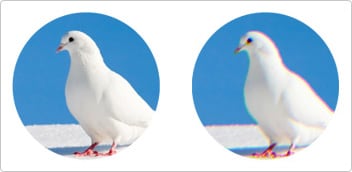 Chromatic aberration which is also called colour fringing, achromatism or chromatic distortion is a type of distortion in which there is a failure of a lens to focus all colors to the same convergence point. Chromatic aberration produces soft overall images, and color fringing at high-contrast edges, like an edge between black and white.
Or to put it another way: Chromatic aberration is caused by the lens not focusing different wavelengths of light onto the exact same focal plane (the focal length for different wavelengths is different) and/or by the lens magnifying different wavelengths differently. These types of chromatic aberration are referred to as "Longitudinal Chromatic Aberration" and "Lateral Chromatic Aberration" respectively and can occur concurrently. The amount of chromatic aberration depends on the dispersion of the glass. If you look at an image through a lens with chromatic aberration, color fringing may occur. To correct this some high end binoculars use extra low dispersion glass.
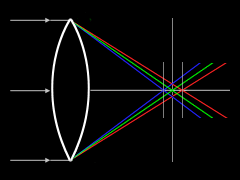 |
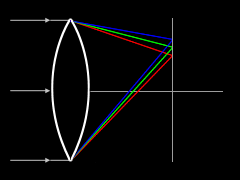 |
| Longitudinal or Axial Chromatic Aberration Focal length varies with color wavelength |
Lateral or Transverse Chromatic Aberration Magnification varies with color wavelength |
Collimation
Collimation refers to the optical and mechanical alignment of the binoculars. If a pair of binoculars is out of collimation, after prolonged use it kind of feels like they are trying to suck your eyes out of your head. Cheap binoculars are often shipped from the factory out of collimation. Good binoculars are carefully collimated, often with laser instruments. This requires time and expense at the manufacturing level, and raises the price at the retail level.
Colour Fringing
See
Chromatic aberration.
Crown Glass
One of two types of optical glass used in the manufacturing of achromatic lenses. Crown glass is harder than flint glass and has a lower index of refraction and lower dispersion (with Abbe numbers around 60). Crown glass is produced from alkali-lime (RCH) silicates containing approximately 10% potassium oxide and is one of the earliest low dispersion glasses. Schott BK7 is an extremely common crown glass.
DCF (Roof Prism)
The D is for 'Dach' which is German for 'roof'. For More See Roof Prism.
Density (Glass)
The density of a glass helps determine the weight of the optical assembly, this combined with lens diameter are critical factors in weight sensitive applications. Density also generally denotes the ability to work with the glass and is often proportional to the cost of the material. When dealing with applications involving extreme temperatures and quick temperature differentials, a glass' coefficient of expansion becomes a key factor. Opto-mechanical designers need to keep this in mind when designing optical assemblies.
Depth of Field
Depth of Field refers to the distance from "near to far" that is in focus at a certain setting of the focus adjustment or at a certain distance. In a given system, as the magnification increases, depth of field decreases. This fact is one of the disadvantages of binoculars with high magnifications and why depth of field is usually more important in comparing spotting scopes or telescopes than binoculars. At very high magnifications, the depth of field can be so shallow that precise focusing is critical and so the location, size, action and feel of the focusing adjustment is an important consideration. Depth of field also changes with the distance observed, usually decreasing in depth as the distance decreases.
 Dielectric Coatings
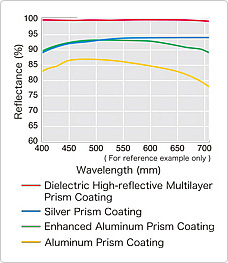
These are coatings found on roof prisms and are there to increase light reflectivity - The problem with the roof prism design is that it features one surface that does not have total internal reflection. It is therefore very important for binoculars' optical performance to raise the reflectivity of this surface.
As the light is incident at a glass–air boundary with an angle less than the critical angle, total internal reflection does not occur at that surface. To get around this problem, a mirror coating is used on those surfaces.
Typically an aluminum mirror coating is used that has a reflectivity of 87% to 93% or a silver mirror coating (reflectivity of 95% to 98%) is used. This light transmission of the prism can be improved by using a dielectric coating rather than a metallic mirror coating. This causes the prism surfaces to act as a dielectric mirror. The dielectric multilayer coating increases reflectivity from the prism surfaces by acting as a distributed Bragg reflector. A well-designed dielectric coating can provide a reflectivity of more than 99% across the visible light spectrum. This reflectivity is much improved compared to either an aluminum or silver mirror coating and this technique provides almost the same brightness as that perceived by the naked eye, and clear, high-contrast images that display accurate color reproduction.
Dielectric Mirror
A dielectric mirror, or Bragg mirror, is a type of a mirror composed of multiple thin layers of dielectric material, that is usually positioned on a substrate of glass or some other optical material. By careful choice of the type and thickness of the dielectric layers, one can design an optical coating with specified reflectivity at different wavelengths of light. Dielectric mirrors are also used to produce ultra-high reflectivity mirrors: values of 99.999% or better over a narrow range of wavelengths can be produced using special techniques. Alternatively, they can be made to reflect a broad spectrum of light, such as the entire visible range or the spectrum of the Ti-sapphire laser. Mirrors of this type are very common in optics experiments, due to improved techniques that allow inexpensive manufacture of high-quality mirrors.
Diopter (US) / Dioptre (UK)
This is
a unit of measurement of the optical power of a lens (or a curved mirror). It is equal to the reciprocal of the focal length measured in metres (1/metres). Therefore it is a unit of reciprocal length. Eg: a 4-dioptre lens brings parallel rays of light to focus at 1⁄4 meter.
Diopter Adjuster
A separate eyepiece-focusing tool, usually on the right lens of your binoculars, that allows you to adjust the lenses separately to allow for differences each of your eyes. It plays an important part in correctly focusing your binoculars.
Dioptric Correction
The ability to make an adjustment of the optical instrument like a pair of binoculars to the varying visual acuity of a person's eyes. It is the adjustment of one lens to provide compatible focus when the viewer's eyes have differing visual capabilities. One result is less strain on the eyes that allow for optimal viewing of depth and contrast.
Dispersion
In optics, dispersion is the phenomenon in which the phase velocity of a wave depends on its frequency, or alternatively when the group velocity depends on the frequency. Media having such a property are termed dispersive media. Dispersion is sometimes called chromatic dispersion to emphasize its wavelength-dependent nature, or group-velocity dispersion (GVD) to emphasize the role of the group velocity. The most familiar example of dispersion is a rainbow, in which dispersion causes the spatial separation of a white light into components of different wavelengths (different colors).
Distortion
You can get a number of different types of distortion in optics, these include aberrations like Spherical and Chromatic. But can also include what are sometimes referred to as either Pincushioning or Barreling. These are distortions where straight lines can sometimes look like they are curved when looking through the device:
Doubler
Also known as a Doubler Tube is an imaging lens adapter that consists of a negative focal length achromatic lens that doubles the magnification for a specified working distance by giving half the field of view.
 Exit Pupil
UPDATE: For the most comprehensive explanation, take a look at my article on the Exit Pupil - The Complete Guide.
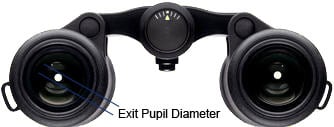
This is the amount of light rays that enter the objective lens and exit the ocular lens. It is an important measure if you want to know how well a binocular will perform in dim light. The measurement is achieved by dividing the lens aperture by the magnification. Example: With the compact Steiner 10.5x28 Wildlife Pro Binoculars, the exit pupil would be found by dividing the aperture (28) by the magnification (10.5), equaling 2.67. Compare this to a 10x42 binocular that has a 4.2 mm wide exit cone. Doubling the magnification to 20X, results in a much more critical 2.1mm exit cone. A higher exit pupil means the binoculars will work efficiently in dim light, but for well-lit surroundings, an exit pupil of 2.5 to 4 is sufficient.
If you hold a pair of binoculars at arm's length, you'll be able to clearly see the circle of light in the eyepieces, representing the exit pupil.
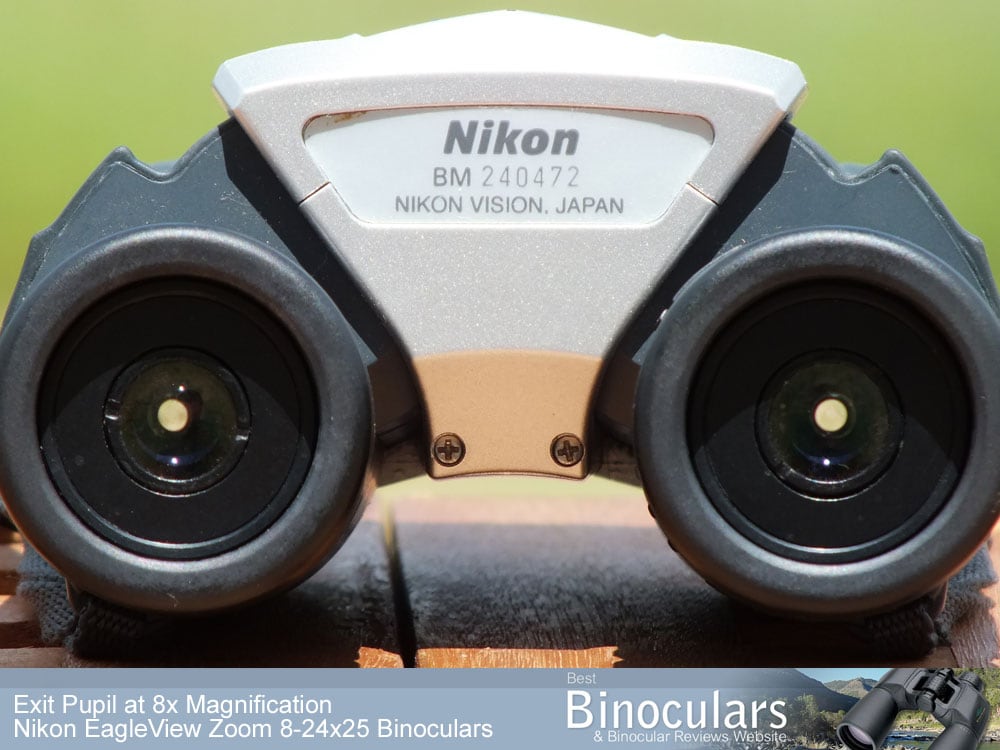
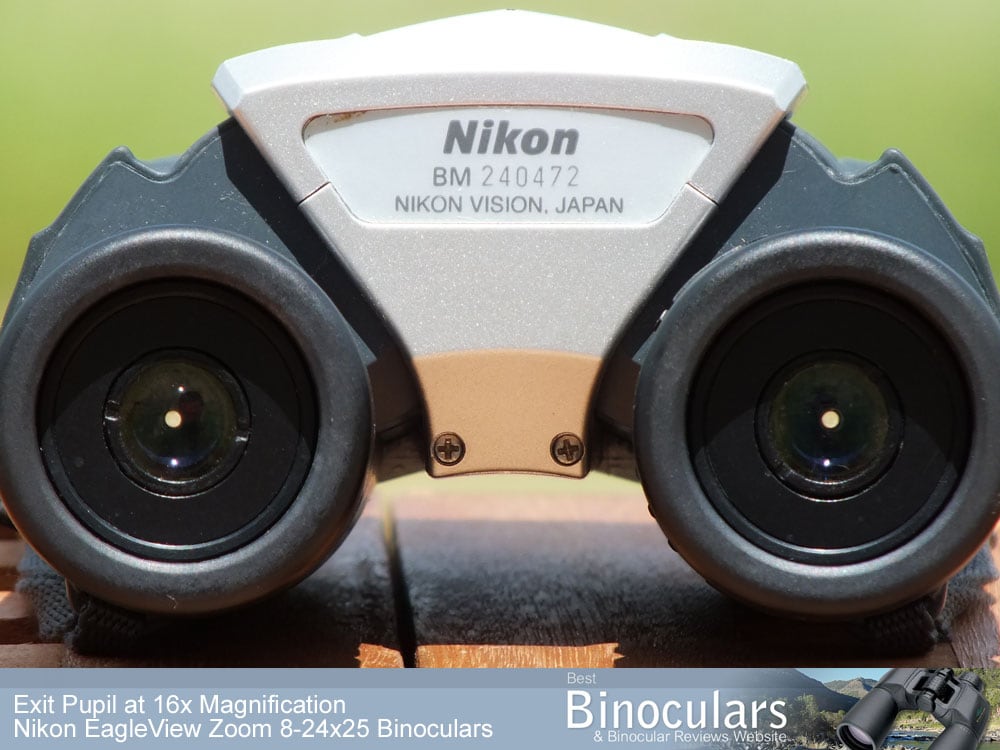
To demonstrate how magnification affects the size of the exit pupil, take a look a the series of photos below that I took using a pair of Nikon EagleView 8-24x25 Zoom Binoculars set at a range of different magnifications. You will notice that the higher the magnification, the smaller the exit pupil gets (assuming the objective lens stays the same size)
 |
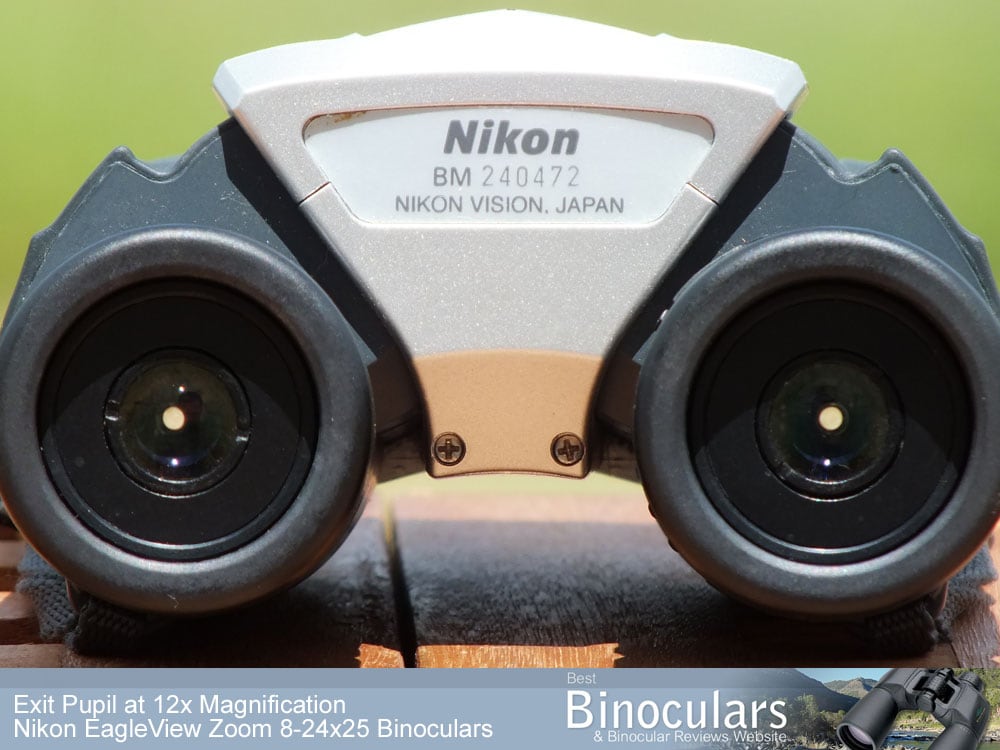 |
| The Exit Pupil at 8x Magnification | The Exit Pupil at 12x Magnification |
 |
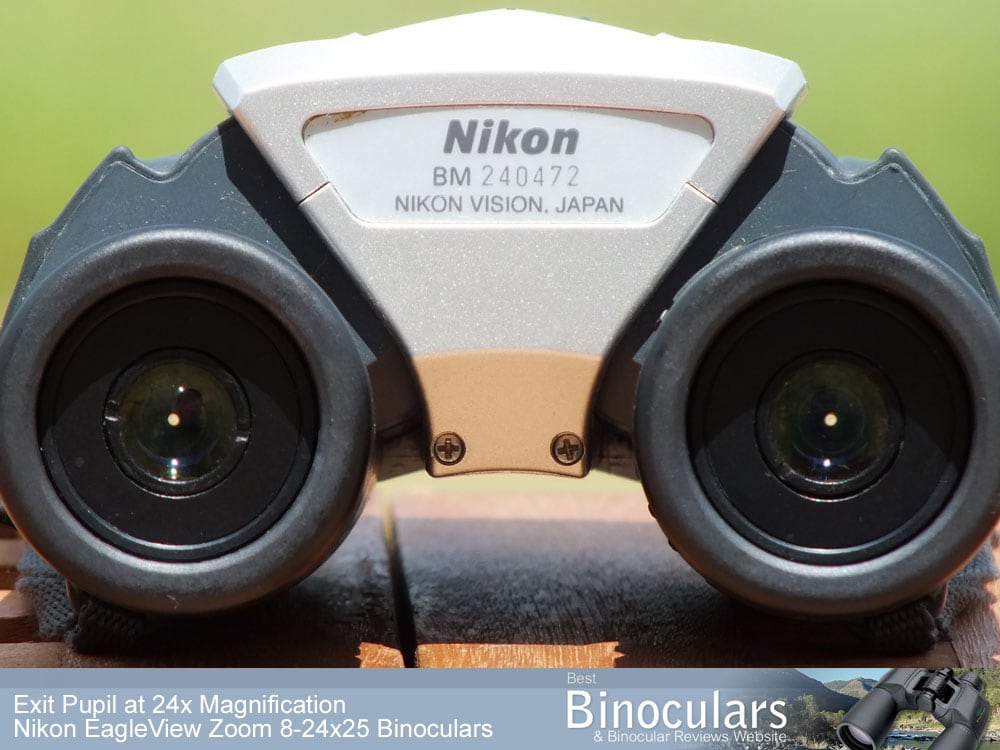 |
| The Exit Pupil at 16x Magnification | The Exit Pupil at 24x Magnification |
It is important to note that how useful a large exit pupil will be depends on the eyes and often the age of the individual user. Let me explain: With age, the eye loses its ability to adapt to low light. While a young persons pupils may dilate to 7mm, an older person may only open to only 5mm. The older persons eye may therefore not be able to use all the light available and in theory would be just as well off with a smaller exit pupil. However whilst an exit pupil larger than the observer's pupil wastes some light, it does allow for some fumbling in side-to side movement without vignetting or clipping of the image.
Human pupils are about 2-3 mm wide at most in bright light, and therefore binoculars exit pupils should be around 3 mm. At night and in poor light conditions our pupils dilate a little more, so it is desirable in these scenarios to have binoculars with larger exit pupils. The disadvantage is that to increase exit pupil size you either have to increase the size of the objective lenses which makes the binoculars bigger and heavier, or decrease their magnification.
Extra Low Dispersion Glass (ED Glass)
Update:
For a more complete explanation please take a look at my Complete Guide to Extra Low Dispersion Glass (ED Glass)
Extra low dispersion glass is used on the lenses of some high end cameras, telescopes, microscopes and binoculars to help prevent chromatic aberration. It is able to do this because it gives the designers of multi-element objective lenses more options enabling them to concentrate and direct the wavelengths of light more effectively. This then enables them to control and minimise aberrations, in particular, chromatic aberration. Generally speaking, the better the aberrations are controlled the cleaner and brighter the image will appear.
Consequently, most professionals and some serious amateurs are more likely to buy higher end optics that come equipped with extra low dispersion glass lenses. Camera's with the glass tend to take picture that are clearer and sharper with little or no chromatic aberration and binoculars and telescopes transmit clearer and sharper images to your eyes. More on Glass Quality.
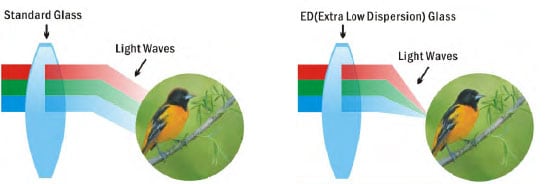
The illustration above is one that Vanguard Sport Optics use to demonstrate the difference between using standard and extra low dispersion glass (ED glass)
ED glass and secondary spectrum
Visible light is composed of lights of various wavelengths. Gathering up all of these lights to a point is ideal for objective lenses.
With a single lens, because light is bent in the same way as with a prism, the focal lengths of lights with different wavelengths vary. As a result, not all light rays reach the same point, which causes chromatic aberration.
An achromatic lens made with conventional glass materials can match focal lengths of two different wavelengths. For red and blue colors, for example, that contain both ends of the wavelengths of visible light, chromatic aberration can be reduced to a certain extent by conforming their focal lengths. However, with more detailed examination, because light with other wavelengths such as green has different focal lengths, residual chromatic aberration results. This residual chromatic aberration is known as secondary spectrum. Combinations of conventional glasses cannot solve this secondary spectrum problem, but particular optical materials which have a unique characteristic of dispersion are needed.
ED (Extra-low Dispersion) glass has this unique characteristic and when combined with other glasses in that it minimizes the effects of the secondary spectrum. Compared to achromatic lenses made with standard glass, ED glass reduces chromatic aberration to a remarkable degree.
For a more complete explanation please take a look at my Complete Guide to Extra Low Dispersion Glass (ED Glass)
Eye-cups
Eye-cups are related to the eye relief as they keep the distance from the oculars to our eyes, but also help keep stray light away from your eyes while using your binoculars. Many eye-cups are made from rubber and can roll up or down depending on whether you use glasses or not. The problem with these is that the constant rolling causes the eye-cups to break. Another type are eye-cups are ones that slide rather than roll, but these can be hard to keep in place. The third type are eye-cups that twist up and down (sometimes called helicoid eyecups) and so they can be left at any position from all the way up to all the way down, some even have click stops at regular intervals with the eye relief distance for each stop marked on the cup so you can get the perfect eye relief for your vision.
 Eye Relief
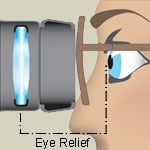
Eye relief is the distance between the ocular lens or the last surface of an eyepiece at which the eye can obtain the full viewing angle or to put it another way, it is the distance that an optical instrument can be held from the eye and the full field of view can still be comfortably observed. The calculation of eye relief is complex, but generally, the higher the magnification and the larger the intended field of view, the shorter the eye relief.
If the eye relief is too short vignetting is will often occur around the periphery of the vision. Whist if a viewer's eye is outside this distance, a reduced field of view will be obtained.
Eye relief can be particularly important for eyeglass wearers because the eye of an eyeglass wearer is typically further from the eye piece which necessitates a longer eye relief in order to still see the entire field of view.
The eye relief given in many product specifications does not always give a realistic view of what you as the user can expect. Although eye-cups can usually be folded down to allow the spectacle wearer to get closer to the eyepieces, there are sometimes lens mountings that do not allow the theoretical eye relief to be obtained. A better measure for those with strict needs would be one that takes account of this available eye relief, the theoretical value less any thickness of the lens' rims. This point can account for confusion in performance and is rarely expressed clearly.
What is more, when a eye-glass wearer orders a new pair of glasses, the optician will often ask if you prefers them close to the eyes or at some distance. This distance is referred to as the Back Vertex Distance, or BVD on a prescription. Since this property affects the available eye relief of any binocular or other optics used, it should be borne in mind at the eye testing stage. The matter should be discussed with the optician, though the only realistic way of testing the comfort is to try the optical device while wearing the usual spectacles. The optician can however make sure that the BVD is no worse in your new glasses than in the old ones that were used in your evaluation.
Eye relief should not be confused with the exit pupil, that is best described as the width of the cone of light that is available to the viewer at the exact eye relief distance.
Eyepiece & Eyepiece Lens
An eyepiece is so named because it usually contains the lens that is closest to the eye when someone looks through a variety of optical devices including binoculars, telescopes and microscopes. The eyepiece usually consists of several "lens elements" (often referred to as the ocular lens or eyepiece lens) contained in a housing, with a "barrel" on one end. The barrel is shaped to fit in a special opening of the instrument to which it is attached. The image can be focused by moving the eyepiece nearer and further from the objective. Most instruments have a focusing mechanism to allow movement of the shaft in which the eyepiece is mounted, without needing to manipulate the eyepiece directly.
An objective lens or mirror collects light and brings it to focus creating an image. The eyepiece is placed near the focal point of the objective to magnify this image. The amount of magnification depends on the focal length of the eyepiece.
The eyepieces of binoculars are usually permanently mounted in the binoculars, causing them to have a pre-determined magnification and field of view. With telescopes and microscopes, however, eyepieces are most often interchangeable. By switching the eyepiece, the user can adjust what is viewed. For instance, eyepieces will often be interchanged to increase or decrease the magnification of a telescope. Eyepieces also offer varying fields of view, and differing degrees of eye relief for the person who looks through them.
F-Number
In optics, the f-number (sometimes called f-stop, focal ratio, f-ratio or relative aperture) of an optical system is the ratio of the lens's focal length to the diameter of the entrance pupil - So to calculate the F-Number, you divide the focal length by the diameter of the entrance pupil (effective aperture).
It is a dimensionless number that is a quantitative measure of lens speed and is an important concept in photography. In other types of optical system, such as binoculars and telescopes, the same principle holds: the greater the focal ratio (the less light is transmitted through the objective lens), the fainter the images created (measuring brightness per unit area of the image).
 Field Flattener Lenses
An issue that you find on many binoculars is that once you have sharply focused on an object at the center of the field of view, the outer or peripheral area can be slightly out of focus.
Conversely if you set the bins so that you are perfectly focused on an object at the edge or periphery of the view, the image at the center can often be slightly out of focus.
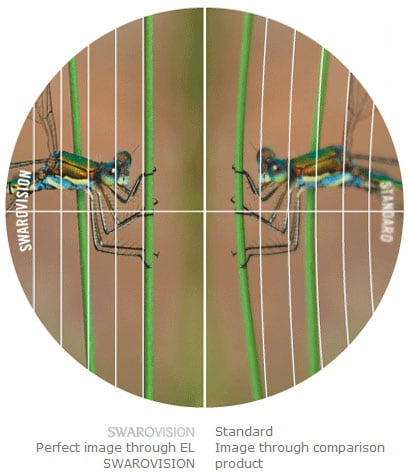
This 'error' is the result of lens aberrations. To correct this issue, some high-grade binoculars incorporate field-flattener lenses within their optical pathway. This is often a lens element (diverging?) that is situated just in front of the main eyepiece elements.
Field-flattener lens can rectify these field aberrations substantially and lower the distortion level, producing sharper, clearer images all the way from the center to the lens periphery.
Aside from the improved image quality, another major advantage to using field flattener lenses is that if desired, it enables the manufacturers to use eyepieces that have a longer focal length for any given magnification and thus helps to maintain or achieve a longer eye relief.
Fujinon FMT binoculars ("F") are a good examples of instruments that use this system. For more see my review on the Fujinon Polaris 7x50 FMTRC-SX Binoculars.
Field of View
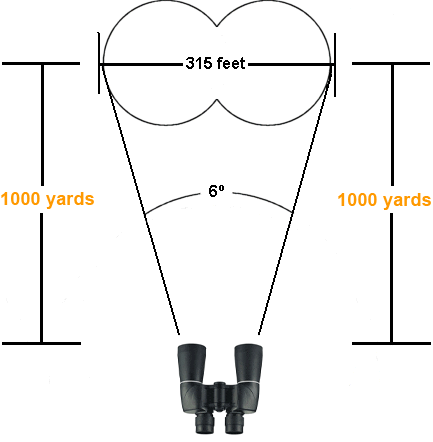
This is the horizontal width of the image you can see while looking through the binoculars at a certain distance. The optical structure of each model of binoculars is different, so even if the magnification rating is the same, how much view the pair of binoculars can pull into your eyes will be different. The width of the view you can see through the binoculars is called the field of view. The field of view is represented as a number of feet per thousand yards of distance. It is sometimes expressed as an angle. To convert from the angle to the linear form expressed in feet, multiply the angle by 52.5. A wide field-of-view eyepiece design often means reduced eye relief and a higher field of view often means a less powerful magnification. For bird watching in a large wooded area, using a wider field of view will be more useful.
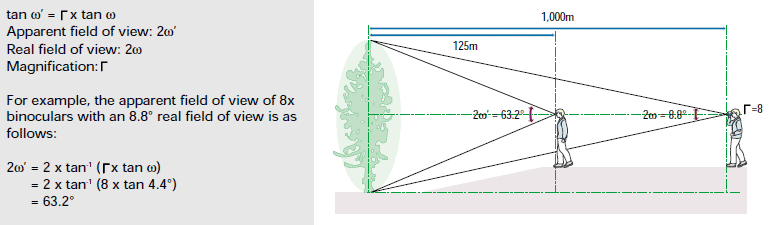
tan ω' = Γ x tan ω
Apparent field of view:2ω'
Real field of view:2ω
Magnification:Γ
For example, the apparent field of view of 8x binoculars with an 8.8° real field of view is as follows:
Flint Glass
One of two types of optical glass used in the manufacturing of achromatic lenses. Flint glass has a low Abbe number and higher dispersion and higher index of refraction than crown glass. Flint glasses are arbitrarily defined as having an Abbe number of 50 to 55 or less. A concave lens of flint glass is commonly combined with a convex lens of crown glass to produce an achromatic doublet lens because of their compensating optical properties, which reduces chromatic aberration (color defects).
Fluoride glass
Fluoride glass is a class of non-oxide optical glasses composed of fluorides of various metals. Some fluoride glasses are difficult to produce on Earth due to their fast crystallization. Optical elements made of calcium fluoride, namely of fluorite crystals, are used in some telephoto lenses, to correct color aberration. They are however being replaced with various low dispersion glasses, which have higher refraction index, better dimensional stability, and lower fragility. More on Glass Quality.
 Focal Length
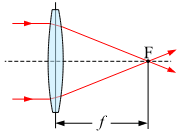
The focal length of an optical system is a measure of how strongly the system converges or diverges light. For an optical system in air, it is the distance over which initially collimated rays are brought to a focus. A system with a shorter focal length has greater optical power (not to be confused with magnification) than one with a long focal length; that is, it bends the rays more strongly, bringing them to a focus in a shorter distance.
In most photography and all telescopy, where the subject is essentially infinitely far away, longer focal length (lower optical power) leads to higher magnification and a narrower angle of view; conversely, shorter focal length or higher optical power is associated with a wider angle of view. On the other hand, in applications such as microscopy in which magnification is achieved by bringing the object close to the lens, a shorter focal length (higher optical power) leads to higher magnification because the subject can be brought closer to the center of projection. Focal length and field of view (FOV) of a lens are inversely proportional.
Fungus
See Lens Fungus
Galilean Optics
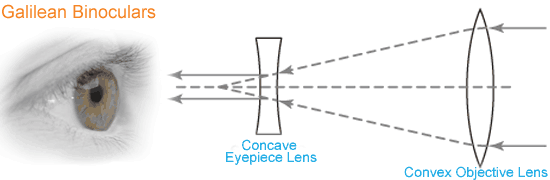
Galilean Optics have a convex objective lens but a concave eyepiece and the advantage is that it produces an upright image and so prisms are not needed to correct the images. On the down side they only produce a fairly narrow field of view and they are not capable of producing high magnifications. Galilean optics are still used in some opera binoculars & theatre glasses.
Galilean Binoculars
Named as such because the same concept was used in the telescopes made by Galileo Galilei in the 17th Century. Because concave lenses are used for the eyepiece lenses, prisms are not needed to correct the images. Also known as opera glasses, this type is used for looking at objects not too far away.
Giant Binoculars
Binoculars with objectives of 60mm or more are called giant binoculars and are common for uses such as astronomical binoculars.
Glass Used in Optics
The most common types of glasses used in optics are crown glasses and flint glasses, designations based on their dispersions. Flint glasses contain lead. These designations are further subdivided by composition and have letter designations and number designations called "glass numbers".
The leading letters in the glass name characterize an important chemical element used in the glass type: F - Fluorine, P – Phosphorus, B – Boron, BA – Barium, LA – Lanthanum. Deviating from this rule are the glass types from the crown - flint series, which progresses from K ("Kron") to KF ("Kronflint" – crownflint) to flints of increasing lead content and hence density: LLF ("Very light flint"), LF ("Light flint"), F ("flint"), and SF ("Schwerflint" – heavy flint). Another deviation is the SK and SSK glass types: SK ("heavy crown") and SSK ("heaviest crown"). LAK, LAF and LASF mean Lanthanum crown, flint and dense flint glass types, respectively.
Common crown glasses have indices of refraction around 1.5-1.6, while extra dense flint glass may have an index as high as 1.75 . Lenses of crown and flint glasses are often used in multi-component lenses because of their complementary properties. For example, a strong positive crown lens with its low dispersion may be used in an achromatic doublet with a weaker negative lens of flint glass (high dispersion) to correct for chromatic aberration.
Helicoid Eyecups
These are usually referred to as twist-up eyecups as they twist up and down using a helicoid mechanism so they can be left at any position from all the way up to all the way down, some even have click stops at regular intervals with the eye relief distance for each stop marked on the cup so you can get the perfect eye relief for your vision.
Hermetically Sealed
An hermetic seal is airtight, important in optics, including binoculars, to make them water and fog proof and to keep out dust. For more see The complete guide to Fog & Waterproof Binoculars.
High Density Glass
As far as I understand it and I may be wrong here, but a higher density glass is easier to work with than one with a lower density and so the designer of a multi-element lens for example is better able to direct and concentrate the wavelength of light thus improving the resolution and color fidelity of the image.
The density of a glass also helps determine the weight of the optical assembly, this combined with lens diameter are critical factors in weight sensitive applications. When dealing with applications involving extreme temperatures and quick temperature differentials, a glass' coefficient of expansion becomes a key factor. Opto-Mechanical designers need to keep this in mind when designing optical assemblies.
Hyperfocal Distance
In optics this is a distance beyond which all objects can be brought into an "acceptable" focus. Or to put it another way, the hyperfocal distance is the closest distance at which a lens can be focused while keeping objects at infinity acceptably sharp. When the lens is focused at this distance, all objects at distances from half of the hyperfocal distance out to infinity will be acceptably sharp.
The hyperfocal distance is entirely dependent upon what level of sharpness is considered to be acceptable. So with a binocular once you have set the focus on infinity - all objects in the background are not actually completely in focus - just an "acceptable" focus and look sharp enough to your eyes.
The index of refraction or refractive index of a substance in optics is a number that does not contain any dimensions, but which describes how light (or indeed any other radiation), goes through that substance.
Thus, the index of refraction refers to the ratio of the speed of light in a vacuum to the speed of light through a given material at a given wavelength.
A higher index of refraction generally bends light more efficiently so there is less of a need of curvature in the lens. Spherical aberration is less present in lenses with higher indices of refraction, while light travels faster through materials with lower indices of refraction. The index of refraction and Abbe number of a glass are typically used by designers as degrees of freedom when designing systems.
IPD -Interpupillary Distance
This is
the distance between the pupils of your eyes. As this distance is different for each person, the binocular can be adjusted to fit by opening or closing the hinge. Many binoculars include an IPD scale in millimeters, on the hinge mechanism. IPD is set correctly by first opening the binoculars right out, then looking at a distant object through the binoculars and slowly folding them shut until you see a perfect circle through the binoculars.
Keplerian Telescope
Invented by Johannes Kepler in 1611, is an improvement on Galileo's design . It uses a convex lens as the eyepiece instead of Galileo's concave one. The advantage of this arrangement is the rays of light emerging from the eyepiece are converging. This allows for a much wider field of view and greater eye relief but the image for the viewer is inverted. Considerably higher magnifications can be reached with this design but to overcome aberrations the simple objective lens needs to have a very high f-ratio.
 Lens coatings (Anti-reflection)
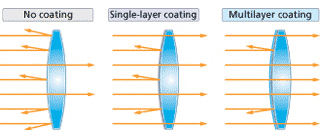
Most good quality binoculars have at least some anti-reflection coatings on their air to glass surfaces which assist with light transmission and help produce brighter images with improved contrast. For more, take a look at my complete guide to Anti-Reflection Lens Coatings on Binoculars.
Low dispersion glass (LD glass) describes a class of glass that have low dispersion properties. Crown glass is a good example of a relatively inexpensive LD glass (Abbe numbers around 60) and which is often used for making optical lenses. Also see Extra Low Dispersion Glass (ED Glass).
Lens Fungus
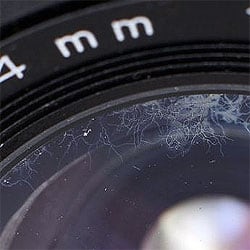 As far as I have been able to find out there are a number of types of fungus and moulds that can form on the inside lens surfaces of your optics including Aspergillus Niger, Ascomycota, Oomycete and Sac Fungi.
A common one looks like tiny hairs growing on the inside lens surfaces, especially on older optical instruments, including camera lenses, microscopes, telescopes and binoculars. It is able to grow on the very smooth surfaces of lenses and causes damage to the lens and/or the coatings. Indeed it can actually etch it with the enzymes and acids that are secreted during metabolism.
To prevent this from occurring most higher quality binos are sealed and filled with a dry gas like nitrogen. This dry and airless environment prevents them from growing.
To protect your unsealed and vintage optics from mould and fungal growths, it is important to store them in a dry area. Also if they have a leather case, consider taking them out of it as this acts as a perfect place for many of these to thrive.
Magnification Principle
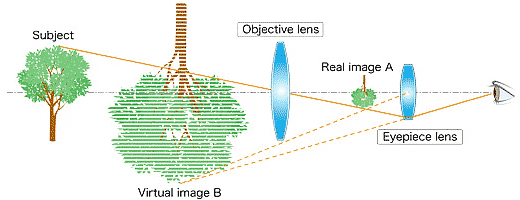
Binoculars use a combination of objective lens and eyepiece lens that magnifies distant objects and makes them appear nearer. Keplerian binoculars in general use have convex lenses for objectives as well as eyepieces.
Refer to the diagram below - In principle, a real image A formed by an objective lens is magnified by an eyepiece lens and viewed as a virtual image B. As a result, the magnified objects can be observed as if they were just in front of your eyes. In this case, the image is inverted, so prisms are incorporated to rectify it so that an erect image can be viewed.
MCF - Reverse Porro Prism
The Zeiss arrangement of Porro prisms (ZCF) allows a wider separation between the objective lenses than between the eyepieces. By reversing the prisms from left to right the objectives can be moved to between the line of the eyepieces, making the overall width of the binoculars only slightly more than the inter-ocular separation. This design of binocular is sometimes, confusingly, just called 'Porro prism' but more commonly 'MCF' type. The aperture has to be much less than the eyepiece separation so is normally from 20 to 40mm.
Mesopic Vision
Mesopic vision is a combination of photopic vision and scotopic vision in low but not quite dark lighting situations. Most night-time outdoor and traffic lighting scenarios are in the mesopic range. Humans see differently at different light levels. This is because under high light levels typical during the day (photopic vision), the eye uses cones to process light. Under very low light levels, corresponding to moonless nights without electric lighting (scotopic vision), the eye uses rods to process light. At many night-time levels, a combination of both cones and rods supports vision. Photopic vision has excellent color discrimination ability, whereas colors are indiscriminable under scotopic vision. Mesopic vision falls between these two extremes. In most night-time environments, there is enough ambient light at night to prevent true scotopic vision.
Nitrogen Purging
Filling an instrument (particularly an outdoor one such as a binocular or riflescope) with zero grade or almost pure nitrogen in order to exclude all moisture and oxygen. This will virtually prevent any fogging and oxidation of the optics.
Objective Lens
In Binoculars, this
is the large lens at the end of the binocular opposite the eyepiece and closest to the subject. This lens gathers light into the binoculars. Generally an objective lens combines convex and concave lenses to minimize color fringing / chromatic aberration, resulting in clearer images.
Ocular Lens
The Ocular lens is the small lens in the eyepiece of the binoculars, microscopes, spotting scopes and other optical devices and is usually the small lens closest to the eye. In some cases (as in some porro prism binoculars), this lens is the same size as the objective lens.
The ocular lens (or eyepiece lens as it is sometimes also referred to) usually consists of several "lens elements" that are contained in a housing, with a "barrel" on one end. This lens magnifies the image formed by the objective lens.
Various techniques have been integrated into eyepiece to meet recently rising demand for binoculars with long eye relief and wide field of view. In general, when you focus at the center of the binoculars' field of view, the peripheral area may be out of focus. And when you focus on the periphery, sometimes the image at the center may be out of focus. This phenomenon is caused by lens aberrations. One of the ways to solve this problem is by employing field-flattener lens on the eyepiece lens. Field-flattener lens can correct aberrations comprehensively, resulting in sharp images across the entire field of view.
Phase Correction Coatings
Phase correction coatings on the prism glass help keep light in correct color phases. These coatings are only needed on roof prism binoculars to enhance resolution, contrast, and color fidelity. Because these coatings keep the light in the correct color phases they produce images that have better contrast, a higher resolution and have a better color reproduction. These coatings are only really found on high end optics. More on Phase Correction in Binoculars.
Phase Shift
Phase shift is any change that occurs in the phase of one quantity, or in the phase difference between two or more quantities of a phase (wave). Manufacturers of high end roof prism binoculars will often use phase correction coatings on the prisms to help prevent phase shift. This is done because when light waves are reflected at the opposite faces of a roof prism, phase shift occurs resulting in marginal deterioration in sharpness.
 Plössl Eyepiece
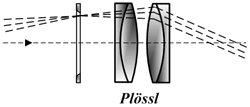
Developed in 1860 by Georg Simon Plössl, the Plossl eyepiece usually contains two sets of doublets and due to the fact that these two doublets can be the same, the Plössl is also sometimes know as a symmetrical eyepiece.
To prevent internal reflections this design requires high quality glass and really well matched convex and concave lenses, which makes this eyepiece one of the more expensive to produce and thus the difference between a poor quality Plössl and well made ones can be large.
The compound Plössl lens usually produces a large field of view, with an apparent field of view of 50° or more, which makes this design of eyepiece perfect for a wide range of observation uses and is a popular design amongst amateur astronomers.
The main down side to the Plössl eyepiece design is that it's eye relief is limited to approximately 70 to 80% of the focal length and thus it has a relatively short eye relief compared to other designs like the orthoscopic.
Prisms
Prisms are used in binoculars to correct an inverted image, there are two basic types of prisms in common use, Porro prisms and Roof (Dach) prisms. Porro Prisms give traditional binoculars their classic two-stage profile, and Roof Prisms, which produce straight optical channels.
In the past most people believed that Porros had superior optical qualities, but were less compact than roof prisms. But today Roof Prism models that use high reflective and phase coating techniques can produce a truly remarkable image quality which is as good as or even better than porro prisms.
Porro Prism
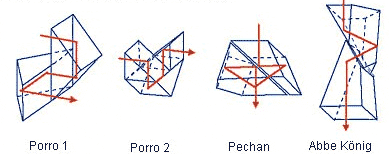
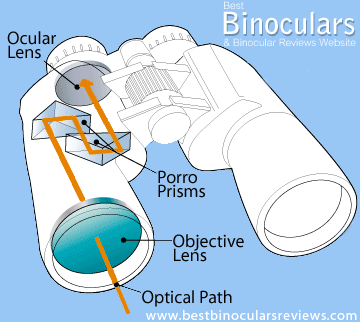
Invented by Ignazio Porro in mid-19th-century Italy. The advantage of the porro prism design is that all of its reflective surfaces are completely reflective, so it loses no light and such binoculars are easy to produce. However, the optical path is bent like the letter Z. Accordingly, this prism system takes up considerable space, so that binoculars with a Porro prism are larger than those with a roof prism.
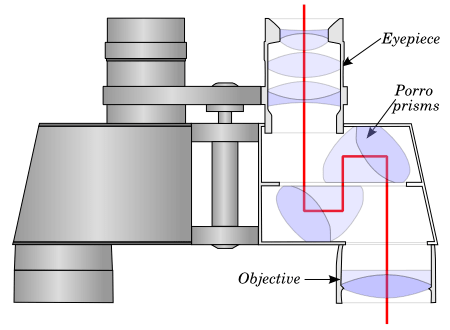
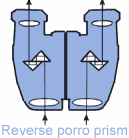 It is easy to spot a binocular with a porro prism as the objective lenses and the eyepieces are not in line with each other. This is because of the internal off-set prisms (as opposed to the aligned roof prisms) that bend the light rays inside the tubes to produce the image. Therefor the ocular lenses and thus the eyepieces are usually closer together than the objective lenses, but the reverse can also be true if they use a reverse porro prism design which is particularly common in compact models and is shown on the image to the right.
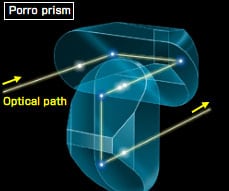 The Porro prism design can be optically superior to the roof prism design, especially in the cheap to medium price range. This is because they don't need the highly reflective coatings added to them as is the case on roof prisms because all the light is reflected off the surfaces.
As well as this, no phase shift occurs within a porro prism and so no phase correction coatings are required.
Both of these coatings are expensive and technically difficult to produce and so are either not added to cheaper roof prisms or they use inferior coatings and so that is why in many cases cheap porro prisms are optically better than cheap roof prisms.
However just like roof prisms, not all Porro prisms are created equal, and prisms made form BAK-4 glass are usually better than those made from BK7 glass.
Because the objective lenses are often spaced wider than roof prisms, they can also sometimes produce a slightly better stereoscopic image.
Refraction and Partial Reflection
Light refracts (bends) when it travels through a border between two transparent substances with different densities. In particular, it bends when leaving air and entering glass and also when leaving glass and entering air. Under ideal conditions all light will bend, but in real life about 95% bends and 5% is reflected back into the first substance. With lenses this is a serious problem because less light reaches your eyes. For a lens with n optical groups (hence 2n refraction surfaces) and coefficient of refraction r (the percentage of refracted light divided by 100), only a fraction L reaches your eyes, and L = r 2n. For r = 0.95 and n = 10, L = 0.36. This means that only 36% of the light reaches your eyes. The rest is scattered around, and some of it results in undesirable ghost images or flare.
To combat the undesirable consequences of partial reflection, scientists developed chemical coatings to be applied to glass surfaces. These coatings increase r (coefficient of refraction) - On binoculars, these coatings are most often just referred to as anti-reflection coatings.
Roof (Dach) Prism ( DCF)
Sometimes referred to as a Dach prism, because this is the word for roof in German and it describes the roof shape of the prism.
Binoculars with a roof (Dach) prism design are ones that have the objective lenses and the eyepieces that are in line with each other, thus the internal prisms are aligned (as opposed to the off-set in the Porro prisms). Because the optical path of the roof prism binoculars is straight, Roof prism binoculars tend to be sleeker, more compact binoculars.
There are a number of different roof prism designs, these include Abbe-Koenig, Amici and Schmidt-Pechan designs. Of the Roof Prism designs, the Abbe-Koenig offers the highest light transfer.
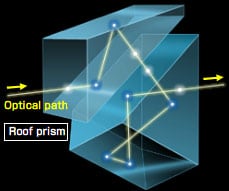 The first prism of the roof prism system has one surface that does not feature total internal reflection, resulting in the loss of some light. It is therefore very important for a binoculars' optical performance to raise the reflectivity of this surface. To do this a coating is sometimes used on the surface to raise it's reflectivity, this is coating is only found on the best quality binoculars and is something to look out for when choosing binoculars. (see dielectric coating)
Also, to produce the roof surface of the second prism that delivers sharp images without a double image or flare, highly advanced technology to process its edge precisely is required. This is why it is important not to attempt to economize on roof prism binoculars and always buy the best you can afford.
Roof prism vs Porro Prism
Binoculars come in two main styles of design, this depends on the kind of prism system used, either roof prism or porro prism. When you look at the binoculars, it is usually quite easy to tell them apart: If the objective lenses and the eyepieces are in line with each other, they are the roof prism design. If they are offset from each other, they are the porro prism design.
Roof prisms binoculars tend to be more compact, but to achieve the same optical quality as Porro prism models they often cost more to manufacture. The top binoculars of each design are now generally considered to be equal in optical quality and it will be down to your personal preference. Because the Porro prism design has wider spaced objective lenses they can have a slightly better stereoscopic image.
For a much more detailed look at the relative benefits of each type of prism take a look at this article - Is a Roof or Porro Prism Best?
Refractive index - see index of refraction
Relative Brightness
The relative brightness index is used to compare how well binoculars with different size exit pupils will perform under dark conditions. This index reminds us that as the size of the exit pupil increases, its area and ability to transmit light grow geometrically. To find the relative brightness, square the exit pupil. A binocular with an exit pupil of 5mm for example has a relative brightness of 25 (5x5=25). Because relative brightness does not consider factors such as optical quality or coatings, it should be used only as a rough guide.
Ruby Coatings
First thing to mention about "ruby" coatings on binoculars is that the coating has nothing to do with the mineral ruby. Some manufacturers filter red to compensate for their poor-quality optics that do not properly converge the color spectrum. By eliminating red from the spectrum, the optics appear to do a better job of minimizing color aberrations, but the view through the binoculars often have an unnatural greenish cast. My feeling is to stay well clear of binoculars that have "ruby" coatings as is simply a gimmick with no redeeming qualities. Read more on Ruby Coated Binoculars.
Schmidt Prism
Schmidt prisms are used to invert and revert an image while deviating it through an angle of 45°. Similar in function to Amici prisms, however the 45° deviation makes Schmidt prisms especially useful in eyepiece assemblies and imaging systems requiring a path bend. Aluminized roof surfaces are often used to enhance the overall light transmission efficiency.
 Schmidt-Pechan Prism
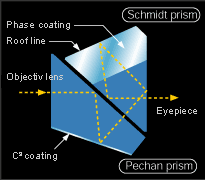
The Schmidt-Pechan prism is a merger of the Schmidt prism (see above) and the Pechan prism and is used to rotate an image by 180° without changing the handedness and is the most commonly roof prism design used in binoculars as the image erecting system.
Whilst they are not 100% internally reflective and thus require highly reflective coatings (see dielectric coatings or silver mirror coatings) on some surfaces to approach the total internal reflection that is achieved naturally with an Abbe-Koenig roof prism or Porro prism, using them enables manufacturers to produce instruments that are more lightweight and compact.
Silver Mirror Coatings
Whilst the Schmidt-Pechan roof prism design has many advantages over the porro prism design, it does have one major problem in that one surface of the prism does not reflect 100% of the light that hits it. Therefore to get the best optical performance it is very important to raise the reflectivity of this surface and to do this, a highly reflective mirror coating is used on those surfaces.
On most lower quality optics, an aluminum mirror coating is used due to its low cost and fairly high reflectivity of 87% to 93%. A silver mirror coating is used when a higher reflectivity (reflectivity of 95% to 98%) is needed and the benefits outweigh the increase in cost. The practice of forming high reflectivity optical coatings with silver also takes substantially more effort than with aluminum, in part because of specific material problems that arise from the aggregated structure of depositing thin metallic films.
Note: Some optical manufacturers go even further and use dielectric prism coatings on their roof prisms that have a reflectivity of more than 99%
Spherical Aberration
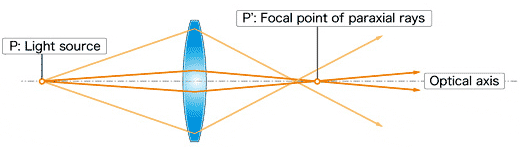
A bundle of light rays coming from one point on the optical axis is focused at a different place than the focused point depending on the distance from the optical axis when the light incidents. This deviation is caused by variations in angles of each incident light ray, and is called spherical aberration. Suppose a screen is placed at P' in the illustration below, the image of P will not be a focused point, but a blurred circle. Making the lens diameter smaller reduces such spherical aberration.
Transmittance
As light travels through a binocular, a certain percentage of that light is lost through absorption and reflection at each air-to-glass surface or inside the prism system itself. The amount of original light available to the observer by the time it exits the eyepiece will vary from as low as 50% to as much as 97%, depending on the quality and number of optical glass elements used in the lenses and prisms, configuration and size of the prisms, collimation of the optical system, and type and amount of anti-reflection coatings present. This is an important factor that directly effects the actual brightness of the observed image. The term used to describe this percentage of light that is not lost through the optical system is transmittance and for most quality binoculars this figure will usually be above 90%. With this factor taken into account, it's possible for a 10 X 40 binocular (exit pupil 4mm) with a high transmittance (90%) to actually deliver a brighter image than a 7 X 35 (exit pupil 5mm) with a lower transmittance (70%).
Twilight Factor & Twilight Performance
The binocular twilight factor is the amount of resolution that you get when viewing in the twilight or the dim light. It is a mathematical formula that shows how both the size of the objective lens and the magnification contribute to a binocular's ability to show detail in dim light and whilst it does not take into account the quality of the lenses and prisms or their coatings. It is important to remember that it can only be used to estimate performance and should only be used as a rough guide to compare the performance of different configurations of binoculars in low light or poor light conditions.
This is because the factor that has the greatest impact on resolution or image detail, will be dependent upon the amount of light available during the time of observation. During daylight hours, when your eye pupil size will be only about 2 to 3mm, magnification will be the principal factor in image resolution. At night, with the eye pupil dilated to 6 to 8mm, aperture size is the controlling factor. In twilight conditions both of these factors control resolution effectiveness and the twilight factor is the term that compares binocular performance under these conditions.
The higher the twilight factor, the better the resolution of the binocular when observing under dim light conditions, or to put it another way: The larger the twilight factor, the more detail you can see in low light.
It is calculated by first multiplying the magnification by the objective lens diameter and then finding the square root of the result. For example in a 7x42 binocular, the twilight factor is therefore 17.2 - the minimum for sufficient detail recognition in twilight - and an 8x56 binocular has a twilight factor of 21.2. A 8x30 binocular has a twilight factor of 15.5 and is therefore less suitable for viewing in very low light conditions. (A twilight factor of about 17 or more is usually required for reasonable low light use.)
Note: The twilight factor is only one parameter among many, it does not say anything about the image quality which is a determining factor in detail recognition in twilight (twilight performance). Also keep in mind that it has long been known from actual use in the field, that twilight factor exaggerates the importance of magnification. Any high grade bino with a small magnification, will show more image detail in low light than a cheap version with a larger magnification.
Another point to keep in mind is that the twilight factor is not a term used to indicate observed image brightness (transmittance) so you cannot assume that a binocular with a higher twilight factor will seem brighter.
Twilight performance is mainly determined by as high a transmission as possible in the right spectral range, as low a stray light portion as possible, as high contrast as possible and as high a resolution as possible. Only if all these requirements are met at the same time - and only then - can the twilight factor be used a measure of the twilight performance in binocular viewing.
A binoculars twilight factor was more important in the past, before modern optical coatings were invented. This is because in a modern binocular, the performance in poor light now depends more on the quality of the glass and optical coatings than on just the twilight factor formula. Good coatings can double the amount of light that gets through the binocular (transmittance), when compared to those that have none or poor quality coatings.
For more, take a look at this article on Twilight Factor and how it differs to the Transmittance and Brightness of a pair of binoculars.
Twilight Factor and Exit Pupil
A 10x40 (twilight factor 20) would effectively resolve better under poor light conditions than a 7x35 (twilight factor 15.4) even though the 10x40 has a smaller exit pupil. Remember, however, that the twilight factor does not take into account the transmittance or quality of the optical system.
UCF or Dual-Axis Porro Prism
This design was introduced by Pentax around 1990. They are similar to MCF in appearance but the objective lenses are a fixed distance apart and the two eyepieces and prism housings swing outwards to adjust the inter-ocular distance. The UCF design is compact and keeps its alignment well.
Ultra Wide Band Coating
An anti-reflection coating process that is customized for every lens element in the optical path, in order to allow the best possible light from the front glass all the way back to the eyepiece. The result? Optimum brightness and true color across the light spectrum.
 Vignetting
This often happens when the eye relief is too short and you get a dark area around the edges or periphery of your field of view. In technical terms, it is a reduction of an image's brightness or saturation at the periphery compared to the image center.
Waterproofing - JIS Waterproof Scale
The JIS (Japanese Industrial Standards) scale is one of the most widely accepted standards for describing how waterproof a product is. For more details and to view the complete scale click here.
ZCF (Zeiss Centre Focus)
Zeiss pattern binoculars have their objective lenses further apart than their eyepieces and are the 'traditional' binocular shape. There are actually two varieties, the 'German style' in which the tubes holding the objective lenses are separate and screwed into the prism housing, and the 'American style' where the objective tube and prism housing are cast in one piece.
The threaded connection for the objective tubes can be a weak point so the American style tends to be more robust. The German style is known as ZCF and the American style as BCF or BWCF. ZCF and BWCF types are usually quite large aperture binoculars, 40mm upwards, and indeed are really the only design possible for apertures greater than the separation between human eyes (the inter-ocular distance). They provide bright and clear images with an enhanced stereoscopic view, but they are bulky and heavy, and really need to be carried in a case to protect them. For other designs See Body Shapes.
Zoom Binoculars
Binoculars that have continuously variable magnification are called zoom binoculars. They are designated by their magnification range and can be identified by the two numbers before the objective lens diameter: For example 8-30x70 or 12-36x80. The hyphen between the first two numbers indicates that the magnification is variable from the first number to the second. For more detailed information read this article on Zoom Binoculars Review.
For more on the basic terms as well as the most common binocular uses, features and accessories, that includes a feature on if certain features like image stabilization are needed for your intended use, check out these Binocular Videos