 |
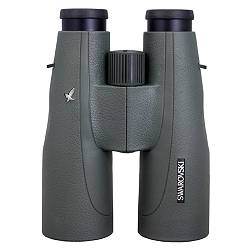
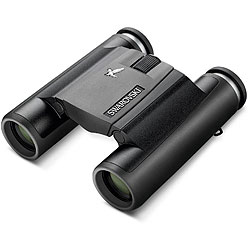
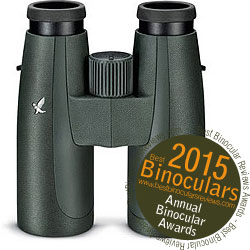
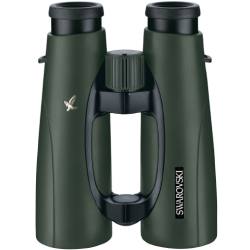
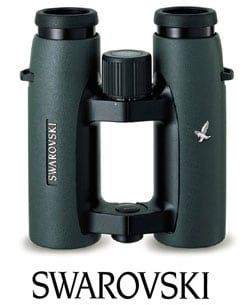
Swarovski Optik are renowned the world over for their excellence in producing the highest quality premium binoculars, telescopes and riflescopes.
Aimed at the professional or serious sports enthusiast, Swarovski often set the standard and produce some of the highest quality optical instruments incorporating highly ergonomic designs, functionality, versatility and optical excellence. This ensures that despite their relatively high prices Swarovski binoculars are still one of the most used on the market today.
Class that is Built to Last.
One of the principal ideas behind their quest for quality is that once you buy Swarovski binocular, you have a pair for life. A sign of this philosophy is that almost all their binoculars come with lenses that incorporate their easy-to-clean external coating that increases longevity.
Whilst from the outside, the Swarovski portfolio of binoculars looks to remain largely static, they do periodically update the models within each series.
Having said that back in 2012 they expanded their range and they now offer a larger selection of binoculars than ever before covering a slightly wider price range, although it has to be said all are still very high end products aimed the top end of the market:
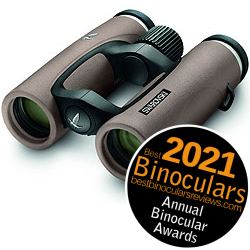
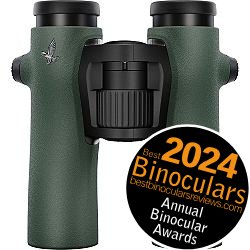
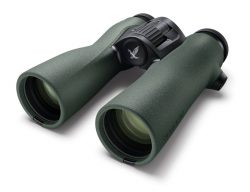 In July 2020, I attended the presentation where Swarovski Optik announced a new binocular and this was not just any new binocular, indeed they announced the new NL Pure as being even better than their iconic EL series instruments and thus over time should become their new flagship range!
Available in 8x42, 10x42 and 12x42 configurations, the major highlights of the Swarovski NL Pure binoculars include a striking new ergonomic shape to the barrels, an optical system that is similar to the EL that includes SwaroBright, SwaroDur and SwaroTop coatings, and I am assuming a new eyepiece arrangement as the fields of view are outstanding. For example the Swarovski NL Pure 8x42 binocular is listed as having a FOV of 477ft / 159m (ft/1000 yds / m/1000 m) which is truly massive.
Swarovski NL binoculars will come supplied with a neck strap, eyepiece cover, objective lens covers, carry bag, and cleaning cloth. Also included is a mini lens cleaning kit with a soap and brush.
You can also buy a very interesting accessory, a forehead rest attachment that is said to offer extra stability, which I feel could be very useful when using the Swarovski NL Pure 12x42 Binoculars especially:

More Information & Reviews:
For much more detailed information as well as photos, please take a look at the link below (reviews to follow as soon as I can get my hands on a pair!)
Check Prices & Where to Buy:
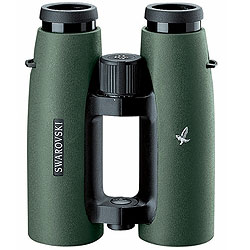 EL = Ergonomic, Light
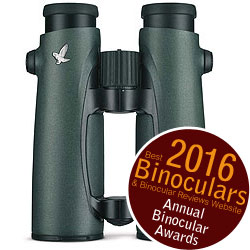
The most popular of their range are the Swarovski EL series binoculars that have been the benchmark of ultra-premium optics for a while. There is no question that these are some of the very best. Not many other binoculars can produce an image with the sharpness and natural color reproduction of the EL binocular. The open-bridge design is a favorite for birders as they are lightweight and easy handle. Included in their whole host of features is the easy to clean external lens coatings called Swaroclean making them not only simple to take care of, but longer lasting. Swarovski EL binoculars also include the new SnapShot adapter for simple connection of a digital camera through your Swarovski lens. Available in 42mm and 32mm objective lens sizes, the Swarovski EL could easily be the last pair of binoculars you will ever buy.
More Information & Full Reviews:
Check Prices & Where to Buy:
As you would expect from one of the best binoculars in the world, from one of the "big 3" alpha brands, Swaro EL binoculars do not come cheap. But that being said of you shop around, you can often make some pretty substantial savings:
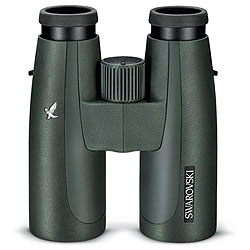 SLC = Slim, Light, Compact
Swarovski SLC binoculars have recently undergone an upgrade and now includes the use of Swarovski's HD optical system. The range is characterized by their reliable and high-quality optics and tough construction. They now also feature the new easy to clean external lens coating called Swaroclean which makes it considerably easier to clean ocular and objective lenses. This is more important than it sounds as it means that they need less intensive attention to cleaning to to achieve maximum clarity, this in turn has the effect of considerably increasing the longevity of optics.
The whole range are well balanced and feel comfortable to hold and the attention to small details is impressive. For example there are thumb rests on the underside as well as depressions on the top side of the binoculars, that combined with the rubber armouring ensure they are secure and comfortable in the hand.
The wide range of models in the SLC series means that you can find a binocular for every purpose.
Sizes Available:
SLC 56 Binoculars
SLC 42 Binoculars
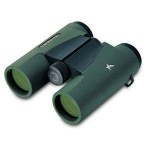 Huge Discount on Swarovski 8x30 SLC WB Binoculars
With a massive saving of $376.68 (29%) in the US and over £250 in the UK, now has never been a better time to buy a real quality pair of Mid-size birding binoculars, and you cannot get much better than the Swarovski SLC 8x30 binoculars. More Information:
>> Big Discount on Swarovski 8x30 SLC Binoculars
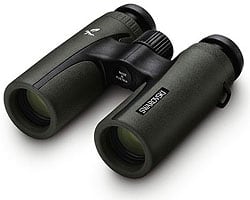 Compact binoculars, that still offer an impressive performance, yet also at a competitive price point and make some of the best value for money binoculars in the Swarovski range.
Introduced in July 2011, the CL Companion models come in two different magnifications (8x30 and 10x30) and are available in three different colors: green, black and sand-brown (Traveler). Read my full review of the 8x30 CL Companion.
The distinctive new design of the new binoculars combines a modern look and feel with the compact construction and proven ergonomics typical of this long established Austrian manufacturer. At only 500 g (17 oz), they are the lightest binoculars in the premium class.
CL Companion Highlights
Sizes Available:
Further Reading & Related Articles
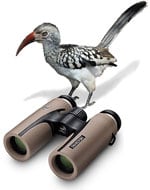 New Swarovski CL Companion Africa Binoculars - Full details of the new Africa version of the Swarovski CL Companion Africa binoculars.
 Price Range
Depending on the model and where you buy them, Swarovski CL Companion binoculars cost about $950 / £730
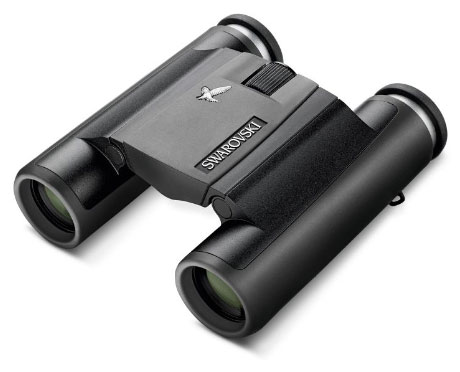 These high end compacts come with a water and fogproof body, small 25mm objective lens and the double hinge roof prism design that make these very compact, especially when folded for a true pocket binocular that can be taken anywhere.
Available in two different configurations (8x25 and 10x25) and are available in three different colors: black, green and sand-brown, the CL Pockets include many of the high end features of their larger siblings:
Main Features
Available Models
Further Reading & Related Articles
Price Range
Depending on where you get them and the model, the Swarovski CL Pocket binoculars cost around $800 / £600:
 Buy & Compare Prices for Swarovski binoculars |
||
 US Shoppers |
 Canadian Shoppers |
 UK Shoppers |
 Deutsch Shoppers |
 Aussie Shoppers |
 Indian Shoppers |
Below are a few featured Swarovski Binoculars that I have fully reviewed: View >> All Swarovski Binoculars reviewed
|
Like most good 8x32 binoculars these are very versatile and well-suited for a wide range of activities and viewing purposes. But added to that you get an exceptional optical performance, a beautiful ergonomic design, the best materials & robust build, are these the best mid-size binoculars ever made? Price: (6/6) Expensive Binoculars | |||||||||||||||
|
|
Very high-end, long range, long-distance binoculars, the 15x56 Swarovski SLC HD has gained a significant reputation among hunters, in particular, for its quality and low light performance. My interest came from a desire for a high magnification binocular for coastal and wetland bird watching: Whilst most bird watchers will use spotting scopes, I wanted to see how a high power binocular would perform as an alternative. Price: (6/6) Expensive Binoculars | |||||||||||||||
|
|
By combining the highest quality optical components and coatings with their technical expertise, there is no denying that these Swarovski's produce an image that is unsurpassed. Add to this their tried and tested exterior and the inclusion of their new FieldPro package and you really do have a special pair of optics. So If you are looking for the ultimate pair of 42mm binoculars, then you will most certainly not be disappointed with the Swarovski EL 8.5x42 binoculars. These are for me now the reference point and by which all others need to aspire towards. Price: (6/6) Expensive Binoculars | |||||||||||||||
|
|
The new Swarovision EL 10x32 binoculars combine the very best optics and coatings with a waterproof, lightweight and tough Magnesium open bridge body to produce one of the very best mid sized binoculars currently on the market. Optical features include Field flattener lenses to correct field curvature, Phase correction and dielectric coatings on the roof prisms and fully multi-coated Swarobright lens coatings for a much better light transmission. Price: (6/6) Expensive Binoculars | |||||||||||||||
| |||||||||||||||
|
|
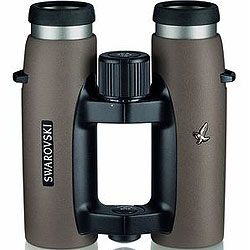
With a beautiful fine aluminium and tan finish the EL 10x32 Traveler binoculars are compact and lightweight making them ideal for travelling with. This combined with Swarovski's unique wrap-around grip also makes them easier and more comfortable to carry in the field. If you then combine this with the quality that only comes with a Swarovski binocular, a tough magnesium housing, tested under extreme conditions in the desert, Arctic and rainforest they also make excellent wildlife observation and birdwatching binoculars and so are one of the best binoculars in the world to take on safari.
Price: (6/6) Expensive Binoculars | |
|
|
With the duel hinge design and compact body, these true pocket binoculars fold up to easily fit into the palm of your hand or indeed your pocket! Fully fog and waterproof, you get a wide field of view and generous eye relief, which is complemented by fully multi-coated optics and phase corrected BaK-4 roof prisms for an image that you expect from Swarovski. Price: (5/6) High Value Binoculars | |||||||||||||||
|
|
Multipurpose Swarovski binoculars optimized for wildlife observation, the SLC incorporates a more traditional look with state of the art materials like a tough, lightweight and waterproof Magnesium housing and a lockable diopter adjustment located on the central focus wheel. Optical highlights include fully multi-coated HD Optics that includes Swarobright & Swaroclean Coatings and Phase Coated roof prisms to produce a view of exceptional quality, contrast and brightness. Price: (6/6) Expensive Binoculars | |||||||||||||||
|
|
The big brother of the extremely popular Swarovski EL range of binoculars, the 10x50 version offers the user some very interesting advantages over the more standard 42mm versions and makes for a very interesting choice. There is no question about the quality, so in this mini review, I take a close look at these advantages as well as the draw backs and compare them to the other Swarovski EL binoculars that I have tested to see what kind of user and which uses these are most suitable for. Price: (6/6) Expensive Binoculars | |||||||||||||||
|
View >> All Swarovski Binoculars reviewed on The Best Binoculars & Reviews website.
Swarovski spend a huge amount of time, effort and money ensuring that all their coatings are perfectly applied as small errors can produce a big difference in image quality between binoculars. Dale Forbes, the Marketing Manager Nature of Swarovski Optik mentioned to me that "electron microscopic images of their coatings vs those of our competitors, is very enlightening".
They have four major groups of coatings:
The newest versions of Swarovski binoculars boast that they have Swarobright, but what is it? Well in a sentence, Swarobright is Swarovski's own unique prism coating, designed for optimum color fidelity across the whole light spectrum.
So the next question is what is "color fidelity"? Well, the term “color fidelity” refers to the successful interoperability of color data, from image creation to output across multiple targets, such that color reproduction quality consistent with the user’s intent can be achieved.
As you can see the terms just get more and more complicated, I guess the most important question is, does it work. Unfortunately I have not been able to compare for myself a pre-swarobright pair of binoculars with the same model that has the Swarobright coating. But from research that I have done, the people that have reckon that the newer models are even clearer than the already excellent older versions. Below is an example, that I found on an optics forum:
"I once had a chance to compare three different Swaro SLC binoculars: pre-Swarobright, Swarobright with black body (transitional model) and Swarobright with green body.
While all three were pretty nice, the pre-Swarobright binoculars were not as good and I good comfortably see it. Considering all the new binoculars introduced since then, I would not buy a used pre-Swarobright SLC for $800."
So how do you tell if you binoculars are the Swarobright version? Take a look at the color of the light reflected by the objective lenses, they will be greenish on Swarobright versions, whist will be purple in the pre-Swarobright binoculars You can also take a look at the first two digits of the serial number, if it is 68xxxxxxxxx or higher, they are the Swarobright version. Pre-Swarobrights binoculars from Swarovski tend to be more flare prone in difficult light.
These anti-reflection "multi-layered wide-band" coatings were developed by Swarovski Optik which they say combines the physical durability of a conventional anti-reflection coating with even higher levels of transmission.
This is achieved by vaporizing the glass surfaces of the prisms and lenses with exceptionally thin coatings that minimize reflections. Thus they are able to reduce surface reflection over the whole light-wave spectrum, which is usually about 4 to 6%, right down to 0.2% - producing visibly brighter images with much better contrast.
A outer lens coating that according to Swarovski reduces the "energy on the surface" and makes cleaning them much simpler. So now cleaning both the objective and eyepiece lenses is much easier, especially when taking off things like water marks, insect repellents and tree resin. The overall effect is that the lenses require less vigorous cleaning which will significantly increase the life of your optics.
Founded by Daniel Swarovski in 1895, they began life as a crystal cutting company.
 Related Articles & Further Reading
If you have a problem with your product, Swarovski recommend that you do the following:
USA Swarovski Binocular Repair
First make sure you have your model and serial number handy, then call 800-426-3089 for the service repair department. They will then give you an order number and give you instructions on how to return your product.
If under warranty, Swarovski Optik will then carry out repair without charge. If not under warranty, Swarovski will give you an estimate of the cost of the binocular repairs. No repairs will be performed until they have authorization.
SWAROVSKI OPTIK
Service Department
Telephone: 800-426-3089
E-Mail: warrantyrepair[@]swarovskioptik.us
International Customers, including Europe
The initial advice from them is to take the binoculars to your local dealer or you can send the product directly to the factory in Absam. I personally would contact them first before sending the binoculars, the contact details are below:
If under warranty, Swarovski will send back your repaired bin at no cost to you. If the repair is not covered by the warranty, you will receive a cost estimate for the binocular repair before committing to the work.
Contact: Andreas Haider
Leiter Kundendienst & Reparaturen / Head of Customer Service Department
Telephone: 43 5223 511 6204
E-Mail andreas.haider[@]swarovskioptik.at
Contact: Verena Haidegger
Sachbearbeiterin Kundendienst & Reparaturen / Repair Service
Telephone: 43 5223 511 6191
E-Mail verena.haidegger[@]swarovskioptik.at
For more information on repairing binoculars in general and where you can get your optics repaired, take a look at my section on Binocular Repairs.
Address:
General Wille Strasse 88
CH-8706 Feldmeilen
Switzerland
Telephone: (+41) 1 925 71 11
Fax: (+41) 1 925 73 12
http://www.swarovski.com
Statistics:
Private Company
Incorporated: 1895 as Daniel Swarovski & Co.
Employees: 12,600
Sales: SFr 1.99 billion (2000)
NAIC: 339911 Jewelry (Except Costume) Manufacturing; 333314 Optical Instrument and Lens Manufacturing; 333515 Cutting Tool and Machine Tool Accessory Manufacturing



 Price & Where to Buy
 Price & Where to Buy