Binocular Reviews Home > Hunting > Hunting Binoculars
In most forms of hunting and in most terrains, be that walking in the mountains or from a static hide, deep in the forest, using firearms like a rifle, shotgun, or handgun, or more traditional archery weapons like a bow or crossbow, a good pair of binoculars is often a vital piece of equipment to ensure a successful hunt. Indeed there are many hunting experts that I have come across that go as far as to say that the right pair of binoculars for hunting is almost as important as your weapon!
Game Spotting, Identification & Evaluation
Their main uses include helping you to scout the surrounding terrain looking for game and then once spotted, they help you to get a better view of your potential targets to firstly identify the animal, then distinguish the sexes and sometimes ages and then finally evaluate trophies etc.
Terrain Evaluation
For many hunters, but especially those who need to walk and track animals over long distances, another very important use for their binoculars is to be able to take a look at the terrain in the distance and make decisions on the best way in which to pass a particular area.
For example, deciding which valley pathway to follow or at what point to cross a river before you get there can save a lot of time, prevent backtracking and therefore make sure the distances that you have to walk is kept to a minimum.
This specific niche within optics has a number of specific requirements that are a little different than say general use or binoculars for birding.
In this guide, I will go through all of the most important features to look for, paying particular attention to those that are most useful to the hunter:
Many hunters will go out in the early morning or late afternoon/early evening and therefore the light gathering ability and the brightness of the image produced is critical. In general the larger the size of the objective lens, the better the binocular will perform in low light. Other factors including the quality of the lenses, lens coatings as well as prisms will also play a vital roll in transferring the maximum amount of light to your eyes. The down size to large objective lenses is that they not only make the binoculars bigger and heavier, but more expensive as well. So as with most things, you have to strike a compromise to get the best binoculars for your particular needs.
Most full size binoculars will have an objective lens diameter of 42mm, compact binoculars tend to have 26mm or even 22mm diameters.
A good compromise for many hunters wanting to travel light, but still want a good low light performance are mid-size binoculars that come with objective lenses of around 32mm. For me a good quality mid-sized bin often makes the ideal compromise between portability and light gathering qualities.
Most people imagine that the higher the magnification, the better the binocular. Not true. Large magnifications make it really difficult to keep the image that you are look at through the optics still (any slight movement is magnified more and more by larger magnifications).
Larger magnifications also generally reduce the field of view (width of the image that you see). A narrower field of view (FOV) will make it much more difficult to spot game, especially when scanning over large areas, it can also make it harder to track faster moving wildlife.
Having said this, the ideal magnification will also depend on your most commonly used terrain. Those who mostly hunt in the woods and forests will be best off choosing a binocular with low magnification (wide field of view) and plenty of light gathering ability, something like an 8x42 binocular or if you need a more compact binocular, an 8x30 or 8x32.
High Powered Binoculars for Hunting
Those hunting in wide open areas and in the mountains will obviously need to observe game at greater distances and therefore need a larger magnification: 10x, 12x or even greater magnifications may be required. But just keep in mind that the narrower FOV will hamper you a little when searching for game over large areas.
For more information on this, read an article I wrote on the Best High Powered Binoculars for Hunting, that includes advice on what to look out for, as well as a few suggestions on what binoculars to get.
Waterproof & Fogproof
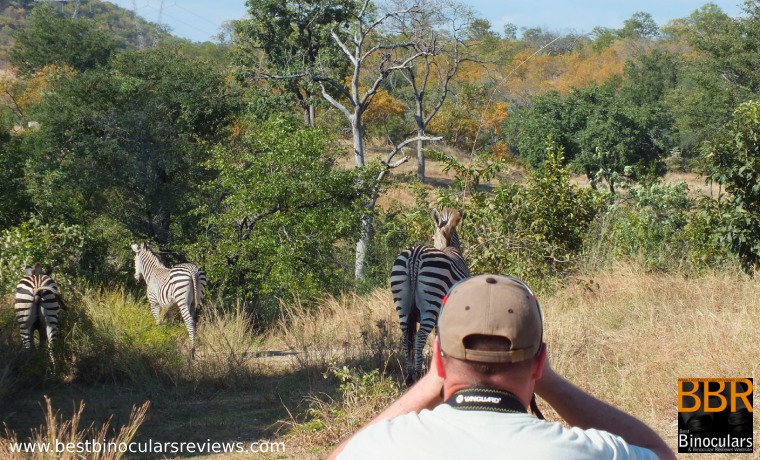
Spending time in any wilderness will mean encountering all sorts of weather conditions, it therefore makes sense to choose a pair of binoculars that are fully waterproof. Sealed binoculars not only prevent moisture from getting inside the optics, but dust and other debris as well. Also look out for fogproof binoculars are filled with argon or nitrogen gas to inhibit internal fogging caused by temperature extremes.
To protect you binoculars from accidental drops and knocks, look out for models that have tough rubber armor.
Although not essential, a camouflage exterior can also be helpful for keeping you out of sight. Many manufacturers produce models in different color variations and include a camo version, that you should keep a look out for.
 Special Lens Coatings
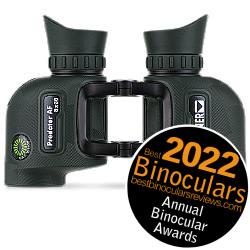
Steiner Binoculars have a range known as the Predator that has been designed specifically for hunting and that feature special high contrast optics that are able to block out haze and reduce the vibrancy of green foliage, whilst at the same time, they enhance the visibility of browns, reds and other wildlife colors
At first, I was a little sceptical an thought it may be a gimmick, but after testing the award-winning Steiner Predator AF 8x30 binoculars, I can honestly say that it works and was really impressed as in many situations it will certainly help you spot hidden game.
For more on this, you can also read my detailed article on Steiner Predator Binoculars, or also take a look at my overview of the Steiner 10x26 Predator Pro Compact Binoculars.
 Rangefinder Binoculars
Binoculars like the Zeiss Victory Range Finder Binoculars that have LED displays within the view that, with a press of a button display the precise distance to the object you are viewing along with their integrated BIS™ ballistic information system.
Also worth taking a look at the Nikon LaserForce Rangefinder binoculars.
For most general uses, being as stealthy as possible is not a major consideration. In fact even for some types of hunting this will also not be of major importance, but for those that need to remain completely out of view and earshot, stealthy hunting gear is essential and this includes your optics:
Camouflage - Many binoculars aimed more specifically at hunters will have a version with a camouflaged exterior. However depending on your preferences, a full camo binocular may not be necessary.
For most hunters, I think it is more important to just make sure the exterior has a dull, neutral color. Here a rubber armor is important, without it, the exterior will be very reflective. Even then look out for softer rubber armors and ones that have an engraved pattern etched into them, as this will reflect far less light than hard shiny surfaces.
Noise Cushioning - Once again here the exterior rubber coating can play a vital role in buffering sound. Hard metallic surfaces make a distinctive sound that carries far and wide when even lightly tapped. Think of your rifle or crossbow or other gear coming into contact with your optics.
So to minimize this risk ensure as much of the binocular has a rubber exterior as possible. Some binoculars will leave most of the metal central bridges exposed. If remaining super quite is important to you, this will certainly be something to look out for.
This is very important if you use eye glasses. Take a look at Eye Relief in my glossary for a detailed explanation, but basically it is the distance behind the ocular lenses where the image is in focus. So if you wear glasses, you can't get your eyes as close to the lenses, you need a longer eye relief that basically projects the image beyond the ocular lens on the binoculars. So if you wear glasses, you should be looking for an eye relief of at least 15mm, to see the full image full image. The down side to long eye relief is that it usually reduces the field of view. Some people wonder if you need to wear glasses at all using binoculars, well If you are near-sighted or far-sighted, you can use your binoculars without wearing glasses and the binoculars focus will compensate, but if you have astigmatism, you will need to use your glasses.
Eye-cups are related to the eye relief as they keep the distance from the oculars to our eyes, but also help keep stray light away from your eyes while using binoculars. Many eye-cups are made from rubber and can roll up or down another type are eye-cups that slide rather than roll, but these can be hard to keep in place.
The third type and now most commonly used are eye-cups that twist up and down and so they can be left at any position from all the way up to all the way down, some even have click stops at regular intervals with the eye relief distance for each stop marked on the cup so you can get the perfect eye relief for your vision.
Eye Shields
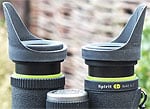 Especially for hunting, the best designs of eyecups, in my opinion, have flaps/shades on the sides, which not only prevent light entering from the side but also stop you being distracted by anything on the periphery of your view.
Indeed some of the very best hunting specific binoculars like the Steiner Nighthunter/Shadowquest 8x56 and the Steiner Predator AF 8x30 binoculars are supplied with the eyeshield design of eyecups and so they are good to go straight out of the box.
However all is not lost if your bins do not have this design as you can purchase a relatively low-cost shield that will fit over your existing eyecup, some of the best that I have used are EyeShields from Field Optics that I highly recommend.
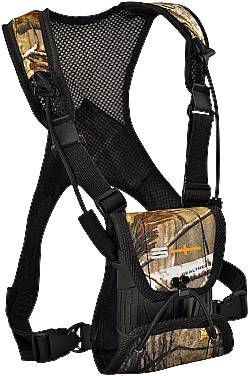 Binocular Harness Attachment
Because of the need to carry around other gear (like your rifle or crossbow for example) as well as your optics, many hunters prefer to carry use a binocular harness.
So whilst you can attach almost any binocular to a harness, there are some models that make this task far easier to do and come "harness enabled" straight out of the box.
What I mean by this is look for binoculars that have quick release clips on the neck straps. These make it possible to quickly and very easily remove the strap and then fix your instrument to the harness.
For mor on this subject, take a look at my guide to the Best Binocular Harness for Hunting.
Every year since 2010, I have highlighted what I feel are the very best instruments that I have fully hands-on tested and then reviewed in a range of categories by giving them an award. This includes a category for hunting, which in the past, I would only award a single binocular the overall title.
However, there have been many occasions when I wanted to offer a number winners in sub-categories within the overall hunting niche (best overall, best budget hunting binocular, best for low light conditions, best at long range, etc) and so this year I am devoting a whole section to of the awards to hunting and below are the winners:
The winner in this category must be a truly excellent general all-round instrument and which must be able to perform in a wide variety of conditions and environments:
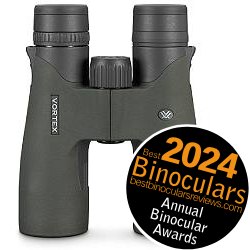 Vortex Razor UHD 10x42 Binoculars
With a BBR score of 92%, the Vortex Razor UHD 10x42 sits very comfortably alongside the very best binoculars that I have ever used, tested, or reviewed, and thus I had no reservations in recognizing them as not only the binocular hunting binocular in 2024.
From the top-hinge designed magnesium frame to the incredible APO Lens System and Abbe-Koenig roof prisms, almost every single component used on the Razor UHD is the best that you can get.
This combined with excellent attention to detail and build quality that is second to none results in a binocular that comfortably compares and in some cases beats the top 'alpha' level instruments from the more established brands from Europe.
|
A Few Highlights:
Main Specs & Features:
Past Winners:
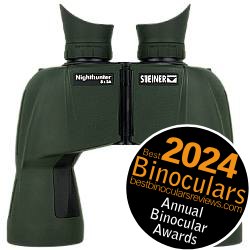 Known as the Nighthunter in Europe or the Shadowquest in the USA, these large 56mm Steiner binoculars have been specifically designed from the ground up with the hunter in mind and especially those needing an instrument that can perform in very low light conditions.
Excellent in Low Light
Manufactured in Germany, using the very best components, optics and optical coatings, this instrument has an industry leading light transmission level of more than 96% (across all visible wavelengths).
This extremely high level of light transmission in addition to the large 56mm lenses ensures that they are able to produce an image that is brighter in low light than anything that I have ever used before. Seriously!
Faster Target Acquisition
The Nighthunter/Shadowquest also uses Steiner's fixed focus (Always in Focus) system. So all you have to do is set up the instrument to match your particular vision once and from then on, you never really need to make any adjustments to the focus. The advantage of this is that you can locate game quicker and it is much easier use these binoculars, even with just one hand which is super important when also carrying your weapon or rangefinder in the other hand.
Extremely Wide View
As we have already discussed, a wide view is really important to most hunters as it makes it easier to scan wide open areas searching for game, whilst at at closer range it helps you to more easily follow fast moving targets.
Extras & Accessories
Steiner Optics supply these with their excellent Click-Lock quick-release system on the neck strap which enables you to very quickly and easily swap between the strap and your bino harness.
Other excellent features include the eyecups with included side shields that are extremely effective in blocking out light and distractions from the periphery of your view.
Cost & Where to Buy:
These very high quality, high end instruments currently retail for around $750 in the US and £800 / €800 in the UK and Europe:
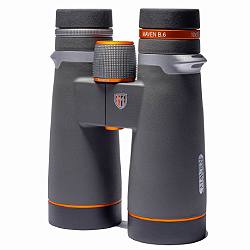
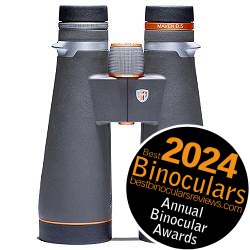 If you are looking for a ultra-high quality long distance binocular at a sub-alpha level price to mount in your hide or at the target range, then look no further than the 18x56 Maven B5 binocular.
Designed to deliver very high quality, very highly detailed views at long distances and that is exactly what I found when testing them. Already the overall winner as the Best High-Power Binoculars 2024, selecting them as my choice as the best long range hunting binocular this year was a complete no brainer and certainly one of the easiest choices that I have had to make this year.
Reviews
For More, read my full Maven B5 18x56 Binocular Review
Price & Where to Buy
Whilst not cheap, these top-end binoculars still cost way less than the Alpha brands from Europe, yet in my opinion they deliver a performance that is every bit as good. At the time of writing, they cost around $1500 / £1500. Check the links below for current prices in the US, UK as well as other countries:
In this section I am looking for an easy to carry, lightweight binocular that you can easily take about wherever you go and on any hunt. This winner would thus be a good option for those who carry lots of other gear and who don't want to have to lug about a full-sized binocular ontop of everything else:
 Steiner CAT™ Game-Sensing Lens Coatings
The Steiner Predator AF binoculars use special lens coatings specifically developed for the hunter as they enhance the reddish brown colors of game and reduce the vibrancy of foliage colors like green, helping you to more easily locate many types of wildlife.
Easy to Carry & Travel Friendly
A smaller more lightweight body is made possible by using relatively small 30mm lenses, but a real standout feature for me is the open bridge body design. Whist this is fairly common amongst roof prism binoculars, it is the first time I have used it on a Porro prism bino.
This combined with the porro prism shape not only makes for an extremely comfortable to hold instrument when holding them up to your eyes, but the gap between the barrels makes for a very secure region to hold onto when walking with them.
Like the Shadowquest/Nighthunter above, this instrument also uses a focus free optical system making it quicker for you to locate your subject and easier for you to use the binocular with just one hand and thus allowing you to hold your weapon or rangefinder in the other.
Cost & Where to Buy
At the time of writing, these Steiner Predator AF binos were available for approximately $340 / £340, which I feel for a mid to high-end instrument is excellent value:
For more options, take a look below at some of the binoculars that I have tested and fully reviewed and which recommend as ideal hunting binoculars. I have divided them into their size categories for you:
The binoculars below all have objective lenses of around 42mm and are classed as "full-size" - these larger lenses ensure they perform well even in very poor light. On the down side, they are a little bigger and heavier than some of the compact and mid sized bins (see below), not a problem if you hunt from a hide, but may not be ideal if you also carry a lot of hunting gear over large distances and difficult terrain.
|
The Alpen Teton binocular incorporates many metal components and magnesium chassis that protect very high-end optics at a price well below what you would usually expect to pay for an Abbe-Koenig bino. The result is a tough, versatile instrument that delivers a high-quality image and what I consider an excellent low-light capability for a 10x42 binocular. Price: (5/6) High Value Binoculars | |||||||||||||||
|
|
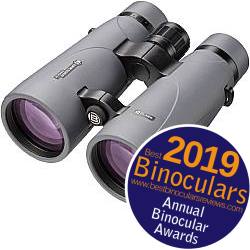
Assembled in the US using Japanese-made components, these Maven B Series binoculars form part of Maven Optic's elite line of optics that have evolved from their award-winning B.1 Binoculars. Combining a magnesium chassis with metal components, a fully multi-coated optical system that includes ED glass lenses and Dielectric components, this 50mm model is both strong & lightweight and delivers an extremely bright high-quality view for a 12x50 binocular. Price: (5/6) High Value Binoculars | |||||||||||||||
|
|
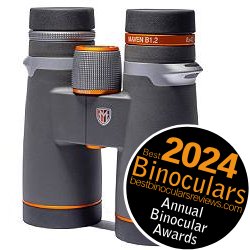
Updated from the B.1 series, the 10x42 B1.2 binoculars are smaller, more lightweight, come with improved optics, a much wider field of view, longer eye-relief, a closer minimum focus distance as well as other improvements. The fact that Maven Optics has managed to do all this and keep the cost at the same level results in a high-performance binocular with an incredible performance to price ratio. Price: (5/6) High Value Binoculars | |||||||||||||||
|
|
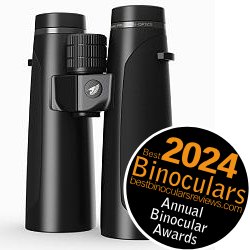
Extremely high-quality binoculars designed in Germany, made using premium class optics and components in Japan. Standout features include a Magnesium housing, fully machined aluminum rotary eyecups, a focus wheel with an integrated & lockable diopter adjuster, Dielectric coated Schmidt-Pechan roof prisms, Double HD glass lenses with hydrophobic exterior coatings. Price: (5/6) High Value Binoculars | |||||||||||||||
|
|
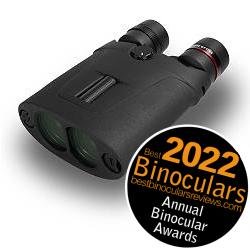
With 2 degrees of correction, these 16x42 Kite APC Image Stabilised Binoculars offer a lightweight and compact alternative to a high-powered binocular and tripod combination making them extremely useful in a wide variety of uses.
Price: (5/6) High Value Binoculars |
|
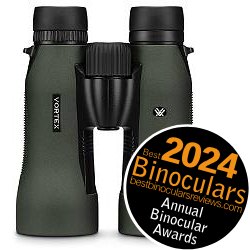
Ideal for nature lovers, wildlife observers and hunters alike. Vortex Optics new flagship binoculars, the Razor UHD uses the very highest level of body and optical components and coatings to deliver a truly superb performance. Highlights include an APO Lens System, Phase Corrected Abbe-Koenig Roof Prisms that deliver an extremely high quality image with a wide field of view. Optics are protected by an Argon purged, waterproof Magnesium Chassis. Price: (6/6) Expensive Binoculars | |||||||||||||||
|
|
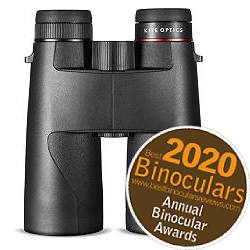
These high-end 10x50 binoculars from kite Optics are only slightly larger and heavier than most 10x42 binoculars, yet at the same time they offer the user a superior quality and very wide view with an image brightness and low light performance that match many high-quality 8x42 binoculars. other highlights include Aluminium Twist-up Eye-cups, Phase Corrected Schmidt/Pechan Roof Prisms and lens with Scratch Resistant & Water-dirt Repelling Coatings. Price: (5/6) High Value Binoculars | |||||||||||||||
|
|
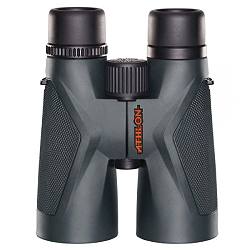
Quite possibly one of the best value for money long range hunting/wildlife binoculars currently on the market, the 12x50 Midas binoculars contain most of the features used on Athlon's top of the range Cronus and Ares series binoculars, yet cost far less. Highlights include a very powerful 12x magnification, Argon purged magnesium chassis, ED glass lenses, phase corrected BaK-4 roof prisms with ESP Dielectric Coatings that deliver bright and very high quality images. Price: (4/6) Mid-High Value Binoculars | |||||||||||||||
|
View >> All Binoculars for Hunting that I have reviewed.
Below are the best large sized hunting binoculars (objective lenses above 50mm in diameter) that I have reviewed and tested on BBR.
Many of them also have high magnifications, but this is not always the case, it just depends on your requirements. For example the large 56mm Steiner Shadowquest 8x56 Binoculars has a moderate 8x magnification, because it is designed to work extremely well in low light conditions.
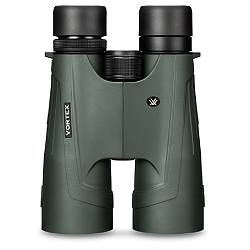
Whilst the Vortex Kaibab HD 18x56 for example is the same size (56mm), but has a massive 18x magnification. here the emphasis is not on low light performance, rather on being able to achieve a detailed image a very long distances. More Info: Best High Powered Binoculars for Hunting
|
For the most part, these high power, long range binoculars from Vortex manage to achieve that very difficult balancing act of a reasonably priced, reasonably high performance binocular that delivers a bright, high-quality image in combination with a high magnification. As well as the instrument, the level and sheer number of included accessories is also impressive... Price: (4/6) Mid-High Value Binoculars | |||||||||||||||
|
|
Super high powered binoculars with an equally high level of renowned Japanese optics, coatings, components and a build quality to match. The 18x56 Maven B5 binocular is designed to deliver high quality, highly detailed views a long distances and all at a price well under that of most other "alpha" level instruments. Price: (6/6) Expensive Binoculars | |||||||||||||||
|
|
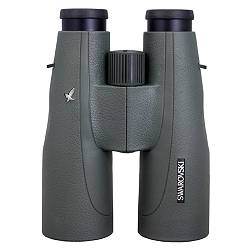
Very high-end, long range, long-distance binoculars, the 15x56 Swarovski SLC HD has gained a significant reputation among hunters, in particular, for its quality and low light performance. My interest came from a desire for a high magnification binocular for coastal and wetland bird watching: Whilst most bird watchers will use spotting scopes, I wanted to see how a high power binocular would perform as an alternative. Price: (6/6) Expensive Binoculars | |||||||||||||||
|
|
Premium quality optics combined with an very high 18x magnification and a tough outer body that Vortex a well known for, these just might be the ultimate long-range binocular ideal for hunters of big game in wide open spaces as well as general long range observation.
Price: (5/6) High Value Binoculars |
|
Not much larger or heavier than many 8x42 binoculars, these 8x56 Pirsch ED Binoculars from the German Optics company Bresser offer a bright image with a superior low light performance. Image quality is ensured with the use of ED glass lenses, phase corrected and dielectrically coated BaK4 roof prisms, whist the fog and waterproof body also contains features like an all metal focus wheel end eyepiece housing to ensure their durability. Price: (4/6) Mid-High Value Binoculars | |||||||||||||||
|
|
Great quality optics and coatings in combination with very large 56mm objective lenses and a moderate 8x power results in a binocular that is able to deliver the brightest images in extremely adverse light conditions. These attributes as well as many others make this binocular not only suitable but excel in a wide range of uses and times where light is a limiting factor. This includes hunting, security, general wildlife, birding, marine and astronomy. Price: (4/6) Mid-High Value Binoculars | |||||||||||||||
|
View >> All Binoculars for Hunting that I have reviewed.
The compact & mid sized hunting bins below all have objective lenses of about 32mm and under. These may not perform quite as well as larger bins in low light conditions, but due to their smaller size and lower weight are more portable and ideal if you cover large distances on foot or traverse difficult terrain when hunting:
|
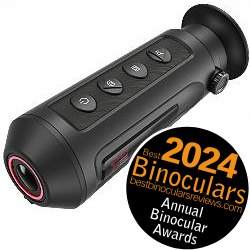
Small, lightweight, easy to use, low-cost thermal imaging monocular that punches well above its price tag. For me, the AGM Asp-Micro TM160 is a game-changer and has now been added to my must-have pieces of gear for use around the home as well as being one of the first instruments I put into my bag on any outdoor/nature/wildlife adventure where I will be spending the night. Price: (4/6) Mid-High Value Thermal Imaging Monoculars |
|
Designed specifically for hunting, these Steiner Predator AF binoculars feature special lens coatings that enhance the colors of game and thus help them to stand out from their environment. These porro prism binoculars also have an always in focus optical system that ensures you are able to quickly locate and then follow wildlife. The small shape and open bridge design is extremely comfortable to hold and ideal for travel as well as those who carry a lot of other gear. Price: (4/6) Mid-High Value Binoculars | |||||||||||||||
|
|
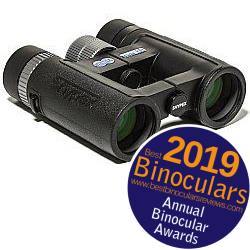
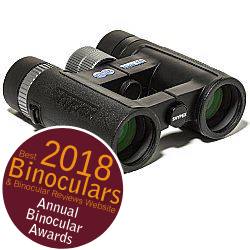
These high performance, mid-size Snypex binoculars offer the user greater image detail at longer ranges and are an ideal instrument for travel, safaris, hunting and general nature and wildlife observation. Top specification optical components include APO lenses with ED glass elements, Bak-4 Dach roof prisms with phase correction and dielectric coatings that ensure the best possible views... Price: (4/6) Mid-High Value Binoculars | |||||||||||||||
|
|
Very high quality mid-sized 10x32mm binoculars that will appeal to the enthusiast and serious user and makes an ideal high end optic for any travel related adventure including safaris, hiking or backpacking. Major highlights include an extremely high level of optical components that combine well to produce an image of superior quality. Add to this a very wide field of view, great close focus distance and plenty of eye-relief and many other features... Price: (4/6) Mid-High Value Binoculars | |||||||||||||||
|
|
These 8x32 Snypex Knight D-ED binoculars come about as close as any as being the perfect general use mid-sized instrument. The highest quality optical components like APO lenses with ED glass elements, Bak-4 Dach roof prisms with phase correction and dielectric coatings all come together to deliver an image that is as good as many high quality full sized instruments... Price: (4/6) Mid-High Value Binoculars | |||||||||||||||
|
|
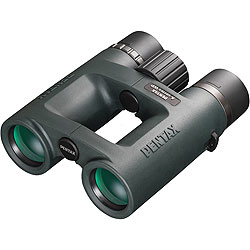
With quality components and coatings, these mid-high end Pentax binoculars are aimed at the more serious users who need or appreciate the convenience of a more portable and lightweight instrument, but are also not willing to sacrifice too much in terms of optical performance. Features include fully multi-coated optics, BaK-4 phase corrected prisms, water and fog proof housing and five stage twist-up eye-cups with 16mm of eye-relief. Price: (4/6) Mid-High Value Binoculars | |||||||||||||||
|
View >> All Binoculars for Hunting that I have reviewed.
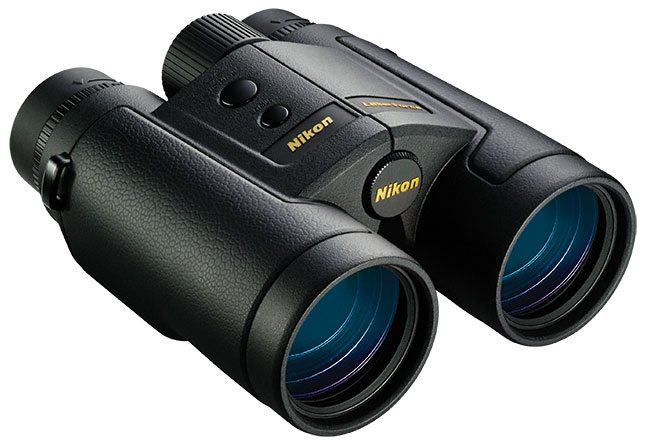 The Nikon LaserForce comes with an onboard laser rangefinder that boasts an impressive range from 10 yards right up to 1900 yards.
Added to this you get a very high end optical instrument with highlights that include a full metal chassis, fully multi-coated optics and eco friendly lenses with ED glass elements.
The LaserForce is currently only available in a 10x42 configuration.
Verdict: An ED quality optic with a on-board rangefinder for a street price of just over $1000 is sure to make them very competitive.
More Details:
For more information with a full list of their specifications and features:
 Price Range & Where to Buy
The LaserForce has a RRP of $1,199.95 which is good for a high end rangefinder hunting binocular and whilst still new this price has already come down to around $1125.00 in some stores. For the latest prices in your country check the link below:
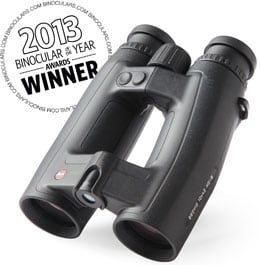 Winner of Binoculars.com's Innovation of the Year Awards 2013
What Binoculars.com say: "Advance Ballistic Compensation in a binocular. That's right. Leica has continued the tradition of continually upping the ante in high-tech optics with 2013 Innovation of the Year, the Geovid HD-B Laser Rangefinder Binocular. ABC, as it's called, allows hunters to upload ballistics data for their equipment and accurately calculate their shot based on ballistics curves and real-time distance, angle, temperature, and air pressure calculations. All within .2 seconds. This incredible technology is paired, of course, with state-of-the-art optics from Leica, with a new Perger Porro prism system and unparalleled optical performance. You didn't know it until just now, but you need this."
What I say: There is no getting around the fact that these Leica binoculars are not cheap, but if you hunt with a rifle and are looking for very, very best hunting binocular, then these must surely be worth taking a very close look at.
As well as all the hunting specific features that Binoculars.com have already discussed above these Leica's have all the optical components and coatings that you would expect to find in any standard binocular in this class. What is more all this comes encased in what must be said is a tough and beautiful looking open bridge body.
Price Range
These Leica Geovid Rangefinder Binoculars cost about $3000 in the US:
View >> All Binoculars for Hunting that I have reviewed.

 Price & Where to Buy
 Price & Where to Buy